• So, who am I, anyway?

Life Unscripted

~ Living Life as I see it… or Don't

Life Unscripted

Tag Archives: dignity

Your Fear is Not my Reality

21 Saturday Oct 2017

Posted by blindbeader in blindness

≈ 11 Comments

Tags

dignity, disability, Disability Employment Awareness Month, employment, fear, speaking

I was recently given an opportunity to speak at a conference attended by (among others) social workers, HR professionals, mediators and educators. To share a platform with so many innovative thinkers (some of them well-known) was an incredible honour for me.
After I spoke, regarding (primarily) disability and employment, I took questions from the audience. One of the questions has stuck with me in the weeks since that conference.
Is part of the problem the fact that people with visible disabilities embody a very real fear of one’s own potential of acquiring a disability? When facing the embodiment of that fear, do we project our fears onto that person because their reality scares us?

I had to pause and think.

The reality is, we all – as human beings – have things that scare us. Some of us are afraid of heights, while others can jump out of airplanes. Some of us love traveling, while the idea of leaving the comforts of home is terrifying to others. There are gourmet chefs out there who know people who are afraid of burning the house down if they turn on the stove. Whether fear is rational or not, it’s there, and fear is human.

How it relates to disability?

It seems that fear of one’s OWN disability – because it could happen to anyone – IS projected onto the person living that life. You are not likely – at age twenty or forty – to suddenly wake up in the morning and learn you’re Caucasian rather than the African-American you always believed yourself to be. Nor will you wake up tomorrow and suddenly find yourself – at thirty or fifty – attracted only to men when you’ve been attracted to women your whole life. But you could, conceivably, find yourself either physically or mentally impaired or disabled due to any number of variable causes from medical misdiagnosis to vehicular accidents, assaults, or any number of other biological or physiological factors. It’s true that disability shows no particular favoritism; it IS the only group that anyone can join at any time.

To avoid the disability label, sometimes people go to extreme lengths. Vision can be viewed as sacred, even at the potential of costing a child’s life. Disabled people frequently hear that a person they are talking to would rather kill themselves than be disabled.

Is disability so hard, really?

Or are attitudinal barriers – piled on to the challenges of disability itself – really what’s hard about living with a disability?

These thoughts all jumped around in my head as I stood in front of all of those people. I said some of the following in response, and wish I had said more.

Fear of sudden disability onset IS terrifying. If I woke up tomorrow and I couldn’t move my legs, or if I couldn’t hear my husband speaking to me, I would be devastated. I would try and find out anything I could to make things different. If they couldn’t change, if my condition became permanent, I would be sad and angry and terrified. Any major life change IS difficult, and people who recieve a disability diagnosis will go through stages of grief and recovery and acceptance.

That is human.

What ISN’t reasonable or fair is to project your human fear of going blind tomorrow onto the reality of my existance. The resume on the table in front of you is just as present as I am sitting across from you; the two are not mutually exclusive. I’ve had years to learn and to grow, just as you have in your own way. Disability does not automatically stunt one’s emotional growth, though the prejudices and fears of others can stunt professional or academic growth for us.

Your fear of imminent disability is not the reality I live with every day. If I scare you that much, is that really about me?

And yet I take the fall for it. My disabled friends take the fall for it. We get passed over for job after job, for opportunity after opportunity, not because we don’t have the skills, but because of someone else’s own personal fear.

It’s time to put fear where it belongs, into perspective. Just as I doubt I will ever know what it’s like to be a Sumo wrestler, or the CEO of a Fortune 500 company, you may nevver know what it’s like to be blind. And that’s okay. You can wonder what YOUR life would be like if you went blind tomorrow, just as I can ponder what I would do if I lost my hearing. But what I cannot do – and what you must not do – is to take those fears and questions and uncertainties and place them on the shoulders of those who embody that reality. Our shoulders are not meant to bear your fear, but our hands are capable of providing help and guidance and productivity to your organization, your school or your company. Maybe in ways you never would expect.

In the Shadows of Gaslights

12 Saturday Aug 2017

Posted by blindbeader in Uncategorized

≈ 9 Comments

Tags

abuse, dignity, emotional abuse, family dynamics, fear, flashbacks, gaslighting, relationships, toxic, trauma

A package was being prepared for shipping. Payment arrangements had been made. By all accounts, an ordinary transaction. But my head pounded, my hands shook, and I just knew I was going to be sick. Before I knew it, I was trying not to vomit into a garbage can. I had to get out, and get out immediately. It wasn’t only the cold I’d been nursing for nearly a week that caused these symptoms; it was the residual affects of gaslighting that reard their ugly heads.

What IS Gaslighting?

Gaslighting can best be described as a manipulative and emotionally abusive tactic that erodes your ability to be confident in your decisions and perception of reality. In an accessible and readable article, LonerWof outlines how gaslighting can be spotted in family, marital or professional dynamics. My own experience, it sadly appears, is far from unique. Because of the personal nature of the stories below, names have been changed.


All in the Family


We learn many behaviors from our family of origin. When Kendra described to me her extended family dynamic, it sounded like a psychological thriller. One family member was accused of abusing women and children, denied it, and then, to hurt his partner, confessed to the behaviors he’d spent years denying. Children witnessed gaslighting behavior by a parent or grandparent, where some children were favored and others were “unspeakably abused” and made to believe they were imagining it. To protect his family from the toxic family dynamic – and with scars and a possibly undiagnosed mental illness of his own, Kendra’s father refused to permit family members to disclose to others where he and his immediate family (Kendra and her siblings) lived. Kendra believes that, because of what she saw growing up, she was able at a young age to get out of an emotionally abusive relationship before it “damaged her in the long-term.” After the breakup, before the age of social media, her boyfriend wrote her a letter that she describes as a textbook check list for manipulative gaslighting.”

But gaslighting is not always intentional. Sometimes, denial can lead to gaslighting behaviour. Rachel lives with a complicated visual impairment which went undiagnosed for years. Her family tends to dismiss her inability to see things, telling her to try harder, that – because an ophthalmologist didn’t diagnose her visual impairment – it doesn’t exist. Rachel finds herself in a complicated place, because relatives and in-laws don’t think she’s “that” blind, and yet she is the only one who sees through her eyes and processes her visual world, and she knows what she can and cannot see.


I love You… but You’re Wrong!


All relationships have conflict, miscommunication, and differing viewpoints. But when clearly-stated boundaries are ignored or deflected in ways to make one party feel unstable or irrational, that is gaslighting.

Sarah described to me a relationship she was in several years ago, where her concerns were glossed over or turned back on her. Boundaries she wanted to set were “evidence” of her mental instability, and she was a “psycho who needed to be hospitalized.” Any behaviors he did that hurt her, he denied doing them at all. When she wanted a short break from him to work things out, he tried to take her guns (used for target shooting) away “for her protection.” She began to doubt herself all the time, wondering if her feelings and concerns and personal boundaries were valid, or if her partner was right, that she was unstable and “psycho” as he claimed.


“You should Be Glad You have a Job Here!”

My recent experience above stemmed from a job I held years ago. I was belittled and bullied, and whenever I tried to raise legitimate concerns, I was told I needed to accept my colleagues as they were, and besides I had things I needed to work on. When I wasn’t being as productive as I knew I could be and was using substandard technology, my concerns were swept under the rug – until one of my colleagues couldn’t take my “unreadable paperwork” anymore – because replacing any equipment would’ve been giving me “special treatment.” Any time I mentioned anything about the work environment, I was told that I should be glad I had a job at all. The last straw was when the braille display unit I used for work needed repairs, and because it was purchased for me years ago (for work purposes) my employer didn’t believe it was their job to pay for the manufacturer to fix it. I ended up having to rely on a braille display from a wonderful generous friend while mine was out for repairs, but the bullying and gaslighting never stopped. I questioned my own perceptions – was I asking too much? Was I being a special snowflake? Was my colleagues’ and managers’ treatment of me in response to something I was doing, or not doing? Were they right, that I should be grateful I had a job at all in a down economy? Only one person at that workplace told me, in an unguarded moment, that they saw what I was going through, that they recognized it, that yes, it was, in fact, as bad as I thought.

Recently, that same braille display quit working. My work environment has changed drastically and is so supportive I can’t even begin to describe it. But so many circumstances were the same. I was borrowing that same display from that same wonderful generous friend, the box with my broken display was being prepped for shipping, and I was making phone calls to figure out how to get the repairs compensated. While support came from all sides – from the idea that I shouldn’t be the one to jump through hoops to simply be able to do my job, to modification of job duties if needed – I couldn’t escape the flashback. I felt like I was back in that office years ago, at the same desk, with the same people stabbing me in the back. Those who actually currently surrounded me were lifting me up and holding me together, and yet all I could hear and feel and see was my experience of years ago, being crushed underfoot, smothered by unreasonably unmet expectations.

In a room full of people, I was alone.

I was staring into the flames of the gaslights.


What if YOU See the Gaslights?


Gaslighting is real. It is not a figment of your imagination. Many who have shared their stories with me have told me that if they had known of its existance, they may have been able to put their fears and concerns into words, and may have removed themselves from the situation sooner.

Sarah has found that spending time with people who take her concerns seriously really helps heal the wounds that her gaslighting experience left on her. She thinks it’s essential to surround yourself with solid reliable people, and to remember that your alleged faulty memory or irrationality would be pointed out by more than just one person (or group of interconnected people), and never consistently in a way to manipulate a situation in someone else’s favor.

Rachel finds, for her, that it’s important to love her family, but to also recognize and embrace her own voice. She describes her family as “voices that I love,” but they do not live her life, and they are not always right, and she thinks that’s okay.

As for me, I don’t think it’s enough to keep my head down and just keep on plugging along. My plan is to seek out both social and professional connections to help make sense of all of this. When one questions their own reality, it’s hard to put it into concrete words. But I will try. I will hold my head high, surround myself with people who support me (singed gaslit eyebrows and all) and truly learn to trust myself again.

If you are reading this and have experienced gaslighting, please know that you are not alone. There is truth in what you are going through, and it is not inescapable. You are not alone. You are not wrong. How you experience the world matters, and no one has the right to take that away from you.

“Um… Dad? I got a Tattoo…”

05 Saturday Aug 2017

Posted by blindbeader in blindness

≈ 3 Comments

Tags

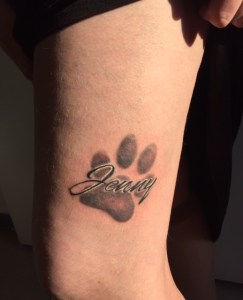
autonomy, dignity, disability, Jenny, personal, tattoos

I recently celebrated a birthday. I chose to celebrate it by attending a stellar performance of “Phantom of the Opera” with my husband and a good friend, silencing my phone’s frequent ringtones heralding “HAPPY BIRTHDAY!” messages from all corners of the technological world, and capping it off with a personal-best-speed 6-mile run. In the midst of all this, I received several birthday wishes and instruction from my father, that I could get ANYTHING I wanted…. except a tattoo.
That’s great!
because… I already have one tattoo… and I don’t want any more.
When I told my father this, he seemed surprised. “How did that happen?” he texted me.
Well, in the manner of all things sarcastic, I texted back that I consulted a tattoo artist, had a design drawn, sat in the chair, and got it done.
Isn’t that how all tattoos “happen”?
I never intended to keep my tattoo a secret. In fact, my dad reads my blog; I mentioned it here. But for people who’ve just met me or don’t read my blog or missed the whole half-a-sentence mention my tattoo got six months ago… here’s some details!
I chose to get it where it can be concealed in the workplace and shown off in a more casual summer atmosphere. Originally I wanted mine on my shoulder blade, but many friends told me in general tattoo-based conversations about their shoulder pain horror stories, so I nixed that idea. At the time I was working in business-to-business sales, and many colleagues had tattoos. I asked a couple of them where they got theirs done, called a couple of shops, and went in for one consultation.
I know many people who have TONS of tattoos; others are terrified of needles. I fall much closer to the “terrified of needles” camp, so I was kind of scared to get this done. Several friends (blind friends in particular) asked me about my experience getting a first tattoo, if it hurt, what my artist was like, how I knew things would be OK… the whole bit. I had to think a lot about it, because I lucked out; my one consultation was so easy and fluid that I never even considered getting another.
When choosing a tattoo artist, you’re effectively finding a doctor, a therapist and a graphic designer all in one. It’s an intensely intimate process and both artist and “canvas” need to be able to effectively communicate, otherwise…. not-cool things could happen… and they’re pretty permanent!
When I walked in for my consultation on an unseasonably warm Friday in January, I had no idea what I would be getting myself in for. The entire staff was warm and welcoming, and Jessie (the artist who would design and place my tattoo) and I sat and chatted about what I wanted, where, and how she could best describe her design for me as a blind customer. I’m pretty no-muss-no-fuss, and I wanted something I would be happy with but that wouldn’t be too elaborate (see above comments about needles). It was one of the easiest service-provider/customer conversations I’ve ever had in my life, and I knew I’d found the right tattoo artist. Money was pretty tight at that time, and so I told Jessie I would give her a call once things picked up and I could justify the expense, but I definitely wanted the tattoo. Not three weeks later I got my current job offer, paid my deposit, and asked for Ben’s thoughts on some drawings. He wanted his own tattoo, but different from mine, and on the first concept drawings Jessie hit the ball out of the park for both of us.
The designs had been chosen, I left Jenny at home, and I made my way back to the tattoo shop. I don’t know what I expected (some cubicle-style room with a curtain across it? Dingy dark corners where tattoos are applied in secret?) but the open airy room I entered with huge windows along the back wall definitely wasn’t it. While I was nervous about getting the tattoo, Jessie was great about putting me at ease. I even got to put on gloves and feel the tattoo gun (without needles) as it vibrated, and touch the needles in their sterile packaging. As I sat in the chair, Jessie went to work, describing everything she was doing, giving me fair warning if she was using a different needle (yes, they feel different), offering me a break if I needed. We talked about other things, too, like good food and dogs and work and business ownership… life, really. The time flew by, and while the tattoo application hurt a little, it really wasn’t that bad. Just over an hour after we got started, a bandage was placed over my freshly-tattooed skin, and it was done.
I remember telling Jessie at the time that I seriously don’t think anyone has ever just “gotten” communicating with a blind person so well. She admitted to feeling slightly uncertain about how much information to give, but she knew that everything she did would have to be described. One never would have guessed that I was her first blind client, though not her first with a disability (she mentioned having done piercings and tattoos for Deaf clients). Not only did I get a cool-looking tattoo, I got the seamless experience – the true luxury – of not having to explain anything at all about blindness or accommodations or humanity and disability. Remember when I wrote about a tattoo artist being like a doctor, a therapist and a graphic designer rolled into one? I hit the jackpot.
So, if you’re in Edmonton, hit up Jessie at Shambhala Tattoo. Tell her Jenny sent you… because, in a way, she did.


My tattoo of Jenny’s paw print with her name inside it


Raising my Voice: My Thoughts on the Proposed Canadian Service Dog Standards

04 Tuesday Jul 2017

Posted by blindbeader in blindness

≈ 2 Comments

Tags

advocacy, Canada, dignity, disability, service dogs, standards

*** UPDATE: As of April, 2018, the proposed standard has been withdrawn and the CGSB is not planning any meetings at this time.


We’ve all seen the news stories about people bringing their pets into public spaces and pretending they are service dogs. We’ve all been angry at the dishonesty, the danger to ourselves and our legitimate service dog teams, and have various ideas on how to combat this. Some propose service dog registry and identification; others place the burden on businesses to exercise the rights they do have (notably to ask the handler of an aggressive or disruptive dog, service dog or not, to remove it from the premises), rather than the people with disabilities who depend on service dogs to live fulfilling independent lives. Still others want governments to take action.

In Canada, an organization in the Public Works and Government Services (not a government committee) – made up of representatives from service dog training organizations, veterinarians, advocacy groups, regulatory bodies, and individuals – has been hard at work for two years to create a national standard for service dogs. Their stated objective is to provide a universal standard for service dog teams. Over the past month, many friends and advocacy groups have sent the draft standards to me, advising me that there is a public consultation phase that ends on July 14. As I know several groups and members who have helped draft this proposed standard, I chose to take my chances and hope for the best. But as emails and facebook posts flooded my phone and computer this past weekend, I realized that I couldn’t bury my head in the sand anymore. I had to figure out just why my phone was going crazy.

I read the standard, beginning to end, and will be submitting my comments to the board.

What The Committee Is Not

This is not a bunch of egotistical, evil people out to make life harder on service dog teams and handlers. While training programs had voting power, other advocates, professionals and owner trainers had votes in the meetings as well. This is a large group of people, all of whom have valid concerns and objectives: to make sure service dogs, handlers, and the general public are safe. If you choose to comment on this post, please be forewarned that I will delete any personal attacks against the committee or disrespectful talk about how you will never visit my country. If you can’t offer anything constructive (be it praise or criticism), keep it to yourself.

What this Document Is Not

This document is not current legislation. Even if it passed as is tomorrow, it is not law. While it may be used to create universal legislation across the country (so that someone in BC won’t undergo stricter scrutiny when they travel to Saskatchewan), legitimate service dog handlers can wake up on July 15 (after the open consultation period) and go about their lives, hopefully with no public interference.

This document is not a declarative statement on where a Canadian can train for a service dog. I’ve seen a ton of fear-mongering on this topic, that the board is saying Canadians can’t train in the States, and no where is this stated or implied. Guide and service dog programs may be concerned about their ability to serve Canadians due to the standards, but the standards themselves, as written, do not restrict location of training. There are enough legitimate concerns in this document without creating more.

This document is not permanent. That’s why it’s called a “draft”. For future readers of this blog, anything written below is paraphrased from the draft standards published on May 2, 2017. It’s a living document; it will change. We as Canadians can make our voices heard by providing feedback through the Web site. We have an opportunity to push for change, to offer suggestions, in a way that is seldom available. Take it!

What They Got Right

This document is thorough. Whether you agree with it or not, it’s a long comprehensive document. People with a wide variety of disabilities are represented, along with a non-exhaustive list of tasks their corresponding service dogs can perform. It touches on everything from training and behavior to realistic expectation, equipment fit, first-aid… I could go on and on. No one can accuse the standards board of not considering any situations. The needs of both service dog and handler are referenced throughout, with great emphasis being placed on the biological and emotional needs of the dog. The rights of persons with disabilities to access public spaces safely with their service dog are well-documented.

Unreasonable Intrusions

But while it’s clear these standards indicate that handlers should have realistic expectations about their service dogs performing learned tasks or learning new ones, their expectations of obedience are higher and, frankly, not as realistic. According to the draft standards, a service dog must respond immediately to obedience commands, on or off-leash,  in all conditions and circumstances. While later in the draft, there is mention of intelligent disobedience (when a dog disobeys a direct command when it is unsafe), the words “under all” do appear related to obedience (Section 4.2.2).

But what is not specified anywhere in this document is who can assess – and how frequently – whether the handler has “enough” knowledge on any of these things, or when the dog is obedient “enough”, even off-leash, in the home? It does appear that an assessor will at some point enter the home of a person with a disability, just because they wish to use a service dog, and I do wonder about an intrusion of privacy that no pet dog owner has to undergo.

There is also particular concern about the equipment used by a service dog team. Based on the current draft, any slip collars, E-Collars, prong collars, or muzzles would not be considered appropriate equipment (section 5.2.1.1). While I personally have strong opinions on my dog with equipment, it is not my place to judge another handler’s appropriate use of tools; even a flat-buckle collar can be used in an abusive manner. I have used a head halter (frequently mistaken for a muzzle, even though my dog can fully open her mouth while wearing it) to re-shape behavior; this standard does not address that at all. If we are responsible enough to handle service dogs in public, we should be treated as responsible enough to use appropriate tools humanely to mitigate behavior or receive tactile feedback.

A brief note about identification: several people think identification is a good way to weed out the fakes. Section 7 addresses the information that would be made available on identification (on a service dog’s harness/leash, or ID card carried by the handler). It does not appear to provide provision for those who wish or need to make their own equipment or buy from manufacturers whose equipment fits their unique needs as a service dog team, but does not readily identify “service dog”. These draft standards do not – nor can they – address who can ask for service dog team identification, under what circumstances.

One of the many other concerns I have is statements regarding separating dog and handler. Section 5.2.3.3 states that the service dog will “tolerate” removal from the handler (by whom?) when required by circumstance. The draft indicates this will be inspected (section 8.2.2.3) by having a person unknown to the dog promptly remove the dog from the handler and walk away a minimum of 6 meters. While I understand this is to test for aggression, as a visually impaired person who has had her dog forceably removed from her, this is traumatic, and does not show compassion and understanding (as stated in the goals of the inspection). As an aside, my dog might be tolerant of being separated from me, but I wouldn’t be! It would be like someone driving a car and the passenger just ripping off their glasses.

Other Concerns/Questions

A few questions I pondered while reading the standards. At what stage of the service dog’s working life these inspections are administered. What do owner trainers do? Where are the inspections held? How frequently? Who pays for travel? Does the handler have the right to access public spaces before the inspection? Does a Canadian who receives their dog from an American source have to undergo additional testing? So many more questions about the logistics that the standards themselves cannot address. They are only the first step in a complicated process which will need regulatory and legislative bodies to implement and enforce. Many (myself included) have grave concerns about the implementation of the standards. These concerns are not without merit. But at the end of the day, these standards can provide a foundational framework in which all service dogs, handlers and the general public can feel safe alongside each other.

So where do We Go from Here?

I will not throw the baby out with the bathwater. I have had friends whose service dogs have had to retire because of attacks by overly stressed legitimate service dogs or encounters with out-of-control pets in vests. Standards, by themselves, are not a bad thing, and I do see some value in these proposed standards of behavior by both handler and service dog. However, I think there needs to be much more clarity about the inspection process and the access rights of a person with a disability using a service dog. If someone owner-trains their service dog and/or uses third-party equipment without “service dog” markings, are they still protected by each province’s Human Rights legislation? If so, then there needs to be more education of service providers about when a disruptive or aggressive service dog team can be asked to leave, and more teeth to penalties for impersonating a person with a disability to take a pet dog into public.

While I believe there is the best of intentions for this standard, I question its enforceability and the potential intrusion it places on the lives of people who already receive strict scrutiny. While the commentary period is open until July 14, raise your voice in constructive ways. Don’t only point out what’s wrong, but how it could be better. And above all, don’t forget to indicate what was done right.

Summertime… when I Feel More… Respected?

24 Saturday Jun 2017

Posted by blindbeader in blindness

≈ 1 Comment

Tags

autonomy, blindness, dignity, employment, respect, sunglasses

This time last year I remember (and facebook reminded me) getting up for a 9:00 AM job interview. I opened my eyes and got hit with a sudden burst of intense stabbing pain… right in both eyes. I had two options: reschedule the interview (as I had already done the day before because I was feeling absolutely awful) or attend the interview with a light-sensitive migraine. If I chose the second option, I had two options stemming from that: suffer through it, or do the somehow stereotypical “blind” thing and walk in with sunglasses.
It was far from an easy decision. To me, sunglasses were for sunny days, not moderately cloudy ones, and absolutely never ever ever indoors. I looked so… blind in them (I still don’t know what I meant by that thought). When I asked several people I knew – sighted and blind – through the instant question-answer format of social media, I received so many answers, and many conflicted with each other. All paraphrasing is mine, but the general ideas went something like this.
“Absolutely not! Your interviewer NEEDS to at least have the semblance of eye contact.”
“Why not? Your eyes hurt; you need to be functional.”
“It’s SUCH a blind thing to do.”
“If they’re fashionable, wear them!”
I chose to wear the sunglasses. They had been purchased years before and were both fashionable and moderately functional for my purposes. The frames were basic black with round lenses, and they didn’t scream “blind person!” to anyone who looked at them. The instant I put them on, just before leaving my house, I felt my entire face relax, and the stabbing pain in both eyes magically disappeared.
The interview bombed. It bombed worse than almost any other interview I went on the year I was unemployed. It had nothing to do with my glasses, my headache, or anything else. The job and I were simply not a good fit.
But when I left the interview and went about my day, my sunglasses still in place, I noticed something else I hadn’t considered before.
People treated me better.
You see, if you were to look at my eyes directly, you would know that I am blind. My left eye is, for all purposes, unusable. My right eye won’t stay still. Walking down busy downtown streets that morning – even with a guide dog – while wearing those sunglasses, people seemed more inclined to make general non-blindness-related conversation with me, or accepted my assertions that I didn’t require their assistance. This old pair of sunglasses seemed, in a way, to be magical to me, to open a doorway to some previously rarely-found milieu of autonomy and dignity.
During the course of a few weeks, the more I wore my sunglasses, the less blind I appeared to others. The less blind I appeared, the more people left me alone (or at the very least respected my polite declining of their assistance, something they offered less frequently). I loved how it felt.
But those glasses I wore to that interview no longer flattered my face the way they had years ago when I had first purchased them. I needed, as a friend stated, a more fashionable pair.
So what does a girl do when she needs a stylish pair of sunglasses that she doesn’t need to see clearly through? She goes to Walmart, and finds the coolest, most professional-looking pair of sunglasses they have that also covers her eyes and flatters her face. I spent a grand total of $15 on my sunglasses, and the complements from friends, family, and strangers make me feel like I should’ve spent more. And when I wear them, people generally treat me better, like I’m any other office worker or customer or pedestrian.
I wonder why that is.

And I wondered why I had resisted them for so long.

When discussing this topic, I had no idea the types of division I would stir up. Some people were very comfortable with their choice to wear glasses, others firmly confident in their decision not to, and many fell somewhere in the middle. Comments ranged from “No blind person should wear glasses, ever, because it makes them look pathetic,” to “I wear them on sunny days because the glare bothers me, but I’m still uncomfortable doing so… it’s such a blind thing to do,” to “I wear glasses because my eyes hurt otherwise,” to “I wear them because I know my eyes are damaged due to accident or illness, so I wear them for the general comfort of those around me.” Others hadn’t considered them one way or the other, either because they were never encouraged to wear them, or because it was really never an issue; while my sunglasses made me look “less blind”, some believed that their wearing them would call attention to their blindness in a way that their uncovered eyes never do. Still others believe that wearing sunglasses means that they are hiding a part of themselves – their blind eyes – even if they are imperfect.

But one friend, whose blindness is due to Retinoblastoma, described in vivid detail being forced by parents or teachers to wear them. She would get in trouble in school if she took them off, and even now – as a grown woman – if she’s in her family’s company, the comment is made that she needs to wear them. Like it or not, she is judged on her appearance. Retinoblastoma can sometimes lead to facial scarring that may be off-putting to some, so some may argue that if it can be covered by makeup or glasses, then why not use them? And yet, my friend has a very complicated relationship to glasses today, for the simple reason that they were pushed at her so much as a child and teenager and even now as an adult.

A simple accessory to some, to others a way to make it through the day. To some they bring freedom, to others a sense of complicated shame. I had no idea that the job interview a year ago would start me on this journey of asking questions about an accessory that most people wear without a second thought. It’s opened up far more questions for me than it’s answered, and yet, I’ve made my own piece with my sunglasses. My cute sunglasses make others more comfortable with me, which makes me more comfortable with myself. I hate that this is so. And I hate that others would receive the exact opposite reaction because their uncovered eyes don’t make them look blind.

So for now, while the days are long and the sun is so bright that almost everyone has to squint to navigate the world visually, I’ll take that automatic respect that these lenses and frames seem to have granted me. Now the question is… can this continue in the winter?

The Easy Life

09 Friday Dec 2016

Posted by blindbeader in blindness

≈ 9 Comments

Tags

autonomy, dignity, disability, employment, love, marriage, perception

One thing I’ve noticed over the years, particularly as it comes to interpersonal dynamics, is the idea that my life with a disability is so hard. I frequently encounter perceptions of strangers that I am unable to cook a meal, hold down a job, or raise a family, all because of my disability. Then there’s the confusion about what disability I actually DO live with every day. I, a blind woman, am perpetually told that I MUST need the elevator, rather than the flight of stairs to which I was asking directions. My friends who are deaf or hard of hearing have frequently told me of their experience of being spoken to in very. slow. and. measured. words – complete with sweeping arm and hand gestures – or having written conversations in what amounts to broken English because of the perception that they do not understand complete sentences. I’ve witnessed a friend in a wheelchair being spoken to like a small child, rather than the competent adult she is, simply because she is seated and therefore shorter than most adults.
Do you know what all this has in common? It’s someone else’s discomfort around disability… and not the challenge of disability itself. Most of us with disabilities have reached a place where the tools of disability are second-nature to us – how to navigate the world, prepare food for ourselves, take care of our bodies. We realize that many people haven’t gone through Disability 101 (a seemingly mandatory course in the school of Disability Acceptance that sometimes takes months, sometimes years to master), and we’re generally understanding of mistakes along the way. What doesn’t seem to make sense to us is the idea that a non-disabled person’s job is to make our life “easier” or “better.” Not only that, but the perception is that it’s up to the non-disabled person to decide what we require – a seat on the bus, a spot closer to the front of the lineup, an elevator instead of stairs – frequently putting us in situations where we have to firmly make our needs known because we were never asked in the first place. This then causes the “well-meaning” non-disabled person to call us ungrateful, rude, abrupt, or pushy for simply asserting our autonomy… because, after all, they “meant well.” We often are forced to have nerves of steel, to bottle up feelings of frustration and anger, not because our disability is so hard, but because it’s so exhausting being used as a “teachable moment“, or having to assert our desires and rights to work and play and access the same facilities that are so often taken for granted.

But you know what/ I’ve discovered? I can have nerves of steel, I can advocate perfectly for myself, I can say all the right things with a perfect tone… and I STILL am misunderstood. I hate that I have to write this, because admitting it means I need something from you. It actually IS your job to help make my life easier, and that of other disabled people in your sphere of influence. But you don’t get to pick and choose what would make our lives easier. In a beautifully eloquent post, my new friend Chris so eloquently wrote about the things that are easy – opening doors, giving us your place in line, offering your seat on the bus. In reference to the big things, the important things, the things that include us in society (work, education, opportunity) “… you’d gladly give me a seat on the bus, but how would you feel giving me a seat on the Board?”

What we want from you takes work on your part… and yet, it, too, is easy. It’s letting go of your perceptions and allowing us to be human beings, with the same hopes and dreams and desires and weaknesses that you have. Would you like to be the only person sitting in the living room during Christmas dinner preparations, twiddling your thumbs, offering to help and being told no, just sit there and look pretty? It happens to disabled family members all the time, and when we attempt to insert ourselves, it becomes an argument that ultimately makes everyone lose. Would you like to be told that you can’t get married to the love of your life? It happens to disabled couples all the time – either due to meddling family members or frustrating bureaucracy. Would you like to be told that your work experience is perfect but then get told that the company hired someone else, but that you’re so “inspirational” for showing up? I have lived this and witnessed this unprofessional attitude over and over again. How about stating a preference for certain activities and being told that it’s “so stereotypical” or too outlandish… for YOU, not for anyone else. Yep… lived that, too.

This is the big stuff, the stuff that makes life textured and complex. It’s frustrating that my own autonomy is so dependent on a non-disabled public listening and learning and letting go of their preconceptions. It’s frustrating that being treated with dignity and autonomy and respect, being provided with helpful information the first time we ask, being listened to when we politely self-advocate is the very rare exception to the rule. I’ve been offered more bus seats than I believe I’ve been thoughtfully considered for jobs for which I am qualified. I’ve been grabbed to direct me more often than I’ve been told that my husband and I are a cute couple just because we love each other, even as the ring on my finger is immediately obvious. I’ve been offered assistance and guidance for which I am extremely grateful, but I’ve also had it foisted on me. The little things do make our lives easier, and they do matter, and they matter a lot. But the big things – employment, education, love, autonomy, respect, consent – matter more, and those things truly do make our lives easier.

You’d gladly give me a seat on the bus, but how would you feel giving me a spot in your kitchen, an important position in your office, an evening babysitting your children, an opportunity where my skills and experience can stand on their own, a day at the altar… or a seat on the board?

An Open Letter to Potential Employers: I have a Disability, and I Expect YOUR Professionalism

21 Friday Oct 2016

Posted by blindbeader in blindness

≈ 3 Comments

Tags

autonomy, dignity, disability, Disability Employment Awareness Month, employment, hard truths, open letters, perception, professionalism

It’s a pleasure to make your acquaintance. We’re in a unique situation where we can both benefit each other. You are offering something I need – a job that will, hopefully enable me to serve your company/school/agency well while financially providing for myself and my family – and I have the qualifications that you are seeking. I also happen to be disabled (or have a disability, depending on my choice in language).

Why am I writing to you today?

Last week I discovered an anonymous rant from one of your contemporaries, bemoaning the lack of quality applicants to a job posting. Resumes that had been slapped together, unprofessional interview attire, or (my personal favourite) an applicant’s Mommy walking into the interview with them would leave anyone frustrated and lamenting the quality of prospective employees. Support was fast and furious from other frustrated people – those looking for work in an overcrowded job market, and those charged with making hiring decisions. I understand that you want qualified, professional, competent people working for your company/school/nonprofit, and you receive dozens – if not hundreds – of resumes. But I have one question before I continue: will you read this letter all the way to the end, or will you dismiss me (as many employers have before you and will again) because I don’t fit the perception of your dream candidate?

October is national Disability Employment Awareness Month. Did you know that almost 90% of people on the autism spectrum are unemployed? How about more than 60% of those who are blind or visually impaired? Those are simply two groups of people with disabilities, and there are many more (even those who would never disclose them to you). It’s not because we’re not able or willing to work… it’s because perception (not disability itself) stands in our way.

Did you know that people with disabilities have markedly higher job retention rates, better attendance, and stronger safety practices than their non-disabled coworkers? Did you know that workplace accommodations are generally affordable (if not at minimal cost), and state and provincial governments may cover the costs of those that are more costly? Large corporations (Apple, Tim Hortons) have already started to include people with disabilities as part of their hiring process, both because we are qualified applicants and because we represent the communities in which they do business.

Back to the professionalism bit. I send in my nicely written and formatted resume with the education and/or work experience and/or skills that you are looking for. I pass the phone/email screening stage and get invited for an interview. I’m dressed up neatly and professionally, arrive on time, shake your hand firmly, answer all of your questions. Maybe I walk in with a cane, or roll in using a wheelchair. Maybe a service dog sits by my side, maybe I hear best with a hearing aid. Perhaps I stim, or struggle with multiple sensory input. Maybe none of these things mark me as being disabled. But that’s all you notice and fixate on. It’s like my resume – with all of that education or experience – doesn’t exist. All you can see is the eyes or legs or ears or brain that don’t work “normally.” Little matter that my resume includes years of relevant qualifications, I get asked how (if I’m lucky) or am told I can’t (if I’m not) use a computer, serve customers, carry things, sort items, dial a telephone, navigate the workplace independently. Someone I know even had a prospective employer ask her how she got dressed for the interview.

And you have a professionalism problem?

But it’s never too late to implement changes to hiring practices, to change the conversation regarding disability in the workplace. We can all benefit each other – you get a qualified employee who represents the community you serve, I have the opportunity to use my education and/or professional skills to economically benefit both your company and myself. You deserve the best, the most qualified applicants. Sometimes, that person is me. You want a professional job applicant? I’m right here! Maybe with a wheelchair, cane, or service dog, maybe without. I’d like to meet a professional interviewer and employer, who will see my documented skills and my hard-won experience for the positive traits that they are. Such employers are out there; you can be one of them. Some disabilities are obvious, others are hidden, but we all want the same things: professionalism, respect, and a fair shot. Are you up to that challenge?


Respectfully,

Disabled Job Applicants Everywhere

Schoolbooks and Slingshots: Education, Legislation, and the Mess In Between

26 Friday Aug 2016

Posted by blindbeader in blindness

≈ 1 Comment

Tags

access, advocacy, ambassadorship, autonomy, dignity, education, employment, legislation, respect

What does discrimination look like? Is it being told, flat out, that you can’t do this task or have this job or enter that building or raise a family? Is it using insulting words, raised voices, thrown objects? Or is it subtler? Is it the pervasive idea that our presence in and of itself – with minds or bodies that don’t function “correctly” – is unwanted?
More important than that, how can we combat it? Is education the best way to eliminate misconceptions? Or is confrontation more productive? Over the years I have believed that one or the other is appropriate, but I’ve done a lot of thinking recently… why is it assumed that the two are mutually exclusive?

Not long ago I found a couple of friends posting on Facebook a status that went something like this: “Maybe I’m the only blind person you know, and maybe you’re afraid to ask me questions. THIS is a safe place to ask any questions you have – big or small – about my life as a blind person.” It’s an interesting thought – something that I would consider doing on social media, for people who have already built up some form of a relationship with me. But I question the appropriateness of educating the general public… just because they are curious and don’t know how I live my life. It’s one thing for a prospective employer or university professor to ask questions about how the job gets done – but my life is my own, and I shouldn’t have to educate the passenger beside me on the bus how I cook, clean, live my life, just because they’re curious and are dying to know. If someone has the time and inclination to share this information, that’s absolutely acceptable. But not everyone wishes to do so, and should not feel judged by the disability community at large or by the general public for politely declining to answer what can be considered nosy, invasive questions when directed at a non-disabled person.
But what if someone says or does or asks something truly offensive? Is education appropriate? The answer is… yes and no. It does definitely depend on the situation – what was said, how it was said, and how willing the other party is to understand that what they said, did or asked was inappropriate or invasive. I recently had a really rough day, where someone I asked for directions talked over me as though I couldn’t talk for myself, an interviewer told me that my resume was just what she was looking for but she “just didn’t know if I could do the job”, and then a woman on the bus told me that I “looked so young and attractive” that she “never would’ve guessed I had any challenges.” With person number 1, I was admittedly abrupt and short, thanking him sincerely for his help but that I could take it from here and speak for myself (His response: “Really? You can?”) The job interviewer was much trickier, because I felt like I had to not only convince her that I COULD do that job, but also be polite in the face of that dreaded C word (“can’t“). When I was later advised the position had been given to another candidate, I requested more information about my interview itself and was able to explain why her comments and questions were unreasonable and inappropriate, and how it’s always best to presume competence; she thanked me for my feedback and promised to implement changes to her interview practices. The lady on the bus… I was so taken aback by her comment – that attractiveness, youth and disability couldn’t co-exist – that I thanked her for her compliment but told her that it was offensive, because disability is not just for the old and the unattractive. She thanked me for telling her and said she would choose her words more wisely in the future.
But not everyone is as willing to hear our answers, having their own ideas about our capabilities and the realities of our lives. More than once someone has made a statement of how sad my life must be, but when I try and explain, I effectively get told that I’m wrong – that I miss out on so many beautiful things. It’s frustrating on an emotional level, but when it comes to employment it becomes economically frustrating as well. So what do we do when others’ perceptions and ideas and design affects our ability to work, to study, to access facilities? We sometimes fight through legislation. Maybe it won’t change someone’s mind until they realize how serious it is that we’re denied job opportunities, academic pursuits, and the ability to move freely through cities, streets and businesses. I’ve never seen the picture of the “Capitol Crawl” – a public visual demand for passage of the Americans with Disabilities Act – but it’s an important image to keep in mind: access to some is not access for all, and until all citizens have access to the same products, services and facilities, a society is not truly free and equal. And even though not everything is a fight, it is important to band together as a stronger disability community – to support each other and the non-disabled who stand with us as we try and make a difference.
Sometimes it’s best to catch flies with honey rather than vinegar. But if you can’t catch them with honey because they just don’t care, vinegar is absolutely a valid option. It’s important to choose our battles wisely, to conduct ourselves with a strong will tempered by grace, wisdom and logic. Emotion, if channeled appropriately, can be powerful, but it can’t be the only way we respond to circumstance. And logic without personal experience is dry and boring and, frankly, no one wants to hear that either. Sometimes change is best accomplished through well-timed, well-tempered words; other times it means pushing back against ideas and thoughts and practices through personal or government advocacy. No one way is right or wrong for everyone, but it is important that whatever we do, however we combat discrimination and prejudice, that it improves life for everyone, not just one segment of our community.

A Burger with a Side of Discrimination, Please

05 Friday Aug 2016

Posted by blindbeader in blindness

≈ 7 Comments

Tags

access, advocacy, dignity, disability, discrimination, employment, perception, respect

Not long ago, I was visiting British Columbia, a province with a very well-publicized and shiny new Service Dogs Act. My trip was generally a positive one, until I attempted to enter one particular bar/restaurant that I had previously frequented. I’m not unfamiliar with being asked for ID to verify my age in such places, and even my (thankfully relatively) few access challenges with my guide dog have primarily been handled discretely and/or quickly. What I did not expect was to be demanded, loudly and publicly, for my guide dog’s paperwork… from across the bar. My dog was doing nothing inappropriate, was guiding me into the restaurant, her nails slightly struggling to gain purchase on the slippery floor. So… I was demanded – loudly and publicly – for paperwork that no one else in the restaurant was required to produce. Long story short, I realized that I didn’t have current ID with me (I had mistakenly packed an expired school-issued ID card), and I was asked to leave. When I told the employee she should consider discretion if she had to request paperwork from paying patrons, she acted so surprised that such a thing would be requested of her.
Without getting into the nitty-gritties, I contacted the BC government on this issue. They ended up responding to my complaint with an inaccessible PDF (one that was scanned as a picture, so no readable text for a screen reader), which said – basically – that since I didn’t have a piece of plastic (whether issued by the government or a guide/service dog program), a business was within their rights to refuse service. They did not address the humiliating and embarrassing experience of being demanded publicly for such information and then publicly being told to leave.
Where is the outrage outside of the service dog and/or blind community? Would anyone else be expected to accept this treatment?
Last week, a news story made the rounds about a teenager with a disability who was purposefully excluded from a relative’s wedding because of her disability. The support on sites like Reddit came in fast and furious, which is awesome… but it got me to thinking: Where is the support from the public when people with disabilities are turned down for jobs (whether stated or implied) because of their disability, forced to alter their academic pursuits or undergo additional testing, find it easier to obtain resources to assist in their death than aids to live life, are killed for simply being disabled?

There is open discrimination in the world – being told you won’t get a job because of your disability (yes, this happens). There is invisible discrimination where it’s implied by the subtext of a conversation or interaction that your presence, request, or concern is not wanted or valid (yes, this happens, too). There is violence against the disabled as can be evidenced by interactions with police, the murder in Japan last week, or by cultures who view disability as a curse on a family. While disability can have its own limitations (at this point, I won’t be driving a car anytime soon); but I believe that it’s not disability that holds us back as much as perceptions and demands of others. To some, not eating at that particular restaurant may be a “little thing”, and I suppose it’s true because we had other options. But what if we didn’t? Maybe that young girl loved her aunt and really wanted to be at her wedding for that special day, and she got slapped in the face because of a perception of what she could and couldn’t do. Judging by the amount of tense family gatherings I’ve witnessed and heard of, discrimination – even by a family member – is a pretty big deal. And how big a deal is open or invisible discrimination in the job hunt when it directly impacts one’s ability to make a living and contribute to a local, national or even global economy? And if we can’t access facilities like everyone else, attend family functions, obtain employment if we have the desired qualifications and skills, do we reach a tragic end because we just don’t belong? To quote a friend of mine, I’ve been gifted a double portion of stubborn. Maybe this will help me, maybe it will help others. It’s never “just about a restaurant” when you’re made to feel scrutinized for simply walking or rolling through the door. It’s never “just one day” when you get told that you, specifically, are not welcome at a celebration, but your whole family can come along now. It’s never “just one job” when you get told there’s no way you can do job tasks you’ve honed over years of practice and hard-won experience.

And it’s never “just one life” when you have to fight not only others’ perceptions, bureaucratic red tape, medical concerns, and discrimination… but yourself underneath it all. Sometimes being who we are is a radical act of defiance.

Relax! It’s Independence!

22 Friday Jul 2016

Posted by blindbeader in blindness

≈ 3 Comments

Tags

advocacy, autonomy, dignity, disability, fear, hard truths, independence, perceptions, service dogs

All the way through high school, I traveled with a white cane. I would move the cane in an arc on the floor no wider than shoulder width (as I was taught), sometimes even narrower than that. You’d think I’d brought and aimed a weapon or set someone’s hair on fire, the reaction was so intense. Students would jump over the cane, slam themselves and their buddies into lockers to get out of my way. My friends thought it was hilarious, but it was probably the first time I seriously felt that people were afraid of me for something that, to me, meant independence and freedom. Since then, I’ve been made aware of huge crowds of people parting the waters because a blind woman with a cane has started walking through a mall during the holidays or a concert venue at intermission. Sure, it makes my life easier, having a clean path, but it’s always made me feel somewhat “other” when it’s announced or otherwise apparent that a path is being cleared for me so that I don’t hit anyone.

Fast forward several years, and Jenny, a wonderful, communicative guide dog wiggled her way into my life. Her presence means that I can travel more fluidly than I ever could with the cane, can even run independently (something I never thought possible). Not everyone likes dogs – some are afraid of being bitten or licked or approached by a dog – and I understand that. If my dog gets invasive, obnoxious, causes a direct disturbance not related to her being a dog doing her job and people being fascinated by her, that’s one thing (all service dog handlers have had moments where their dog’s behaviour has made them want to melt into the floor). But in the span of a week this past spring, I experienced two instances where the mere presence of my dog has caused people to publicly overreact in ways they probably hadn’t intended.
I was sitting on a bus, minding my own business, when the doors opened and a man got on. He turned to walk to an empty seat, saw my dog, then went back to the bus driver and said that he would get on at the back of the bus so he didn’t have to “go past that dog”. I was so shocked I couldn’t say anything. If he hadn’t seen my dog, he’d never have known she was there on the bus. And before anyone raises the “allergies” argument… I’ve worked with people who have allergies, have friends who have allergies, have had strangers discretely tell me they have allergies so that I know to make 110% sure that my dog’s nose is where it belongs, that she’s out of their way, that the risk of contact is as minimal as possible. I have never felt by any of those people as disrespected as I did that day on the bus…
Later that week, I went shopping with a couple of friends and had a lovely time trying on clothes, finding some bargains, and laughing uproariously at a couple of items that fit just slightly wrong enough to be hilarious. After paying for my purchases, Jenny and I were making our way to the exit when two young women more than twenty feet away started screaming that there was a DOG in the store! I chose to redirect Jenny to go a route that didn’t intersect their path, and she handled it with professionalism and grace, but I was so shaken up that two people felt the need to publicly vocalize their fear when my dog and I were doing absolutely nothing to them. At the time, I thought that no one would react similarly to the presence of a wheelchair, but I recently discovered this article that makes me think that such instances happen more frequently than I ever considered.

Last week, I went into a store to return an item. Jenny and I walked up to the counter behind another customer, who very abruptly asked the clerk to ask me to move my dog. I took several steps back out of her way, waited my turn, then walked up to the counter while the other customer walked the looooong way around to exit the store. The clerk told me that the instant she saw my dog, her face just tensed right up. For some reason, it really hurt. It was yet again one more instance proving that I am still considered “other” because I use a dog to travel independently (and if I used a cane I’d get griped at for hitting someone in the ankles).

Why are we so feared? And why is it acceptable? Why did I feel so helpless, like I couldn’t just turn around and ask some of those people if they had something to say directly to me? If someone expressed discomfort with or fear of someone’s race or gender or place of origin or religion, they’d be called out for what they are – homophobic or zenophobic or racist. But because the presence of a disabled body in public is so rare and unexpected, manners go out the window? And that’s acceptable?

So the next time you see someone using a cane for identification or mobility, a guide or service dog, a scooter or a wheelchair, unless they are directly interfering with your ability to go about your day, keep your mouth shut and your fear to yourself. If you want to know how we go about our days so bravely, imagine frequently encountering the fear of others, publicly, and think how you would feel if you had to go through that. We want to go about our days just like you. And you wouldn’t like it if we told our friends that we didn’t want to sit next to a non-white, Hindu man minding his own business on the bus, or freaked out because a woman wearing a head scarf happened to be shopping in the same store as us. You’d tell us to relax… it’s only a bus seat, only a head scarf. Guess what, when reacting to our presence? Relax! It’s a cane, a wheelchair, a dog. Relax: it’s independence.

← Older posts
Newer posts →

Subscribe

  • Entries (RSS)
  • Comments (RSS)

Archives

  • December 2025
  • January 2024
  • December 2023
  • April 2023
  • January 2023
  • December 2022
  • October 2022
  • June 2022
  • April 2022
  • January 2022
  • December 2021
  • October 2021
  • August 2021
  • June 2021
  • April 2021
  • March 2021
  • February 2021
  • January 2021
  • November 2020
  • October 2020
  • August 2020
  • July 2020
  • June 2020
  • April 2020
  • February 2020
  • January 2020
  • December 2019
  • November 2019
  • September 2019
  • March 2019
  • February 2019
  • January 2019
  • December 2018
  • September 2018
  • August 2018
  • July 2018
  • June 2018
  • May 2018
  • April 2018
  • March 2018
  • February 2018
  • January 2018
  • November 2017
  • October 2017
  • September 2017
  • August 2017
  • July 2017
  • June 2017
  • May 2017
  • April 2017
  • March 2017
  • February 2017
  • January 2017
  • December 2016
  • November 2016
  • October 2016
  • September 2016
  • August 2016
  • July 2016
  • June 2016
  • May 2016
  • April 2016
  • March 2016
  • February 2016
  • January 2016
  • December 2015
  • November 2015
  • October 2015
  • September 2015
  • August 2015
  • July 2015
  • June 2015
  • May 2015
  • April 2015
  • March 2015
  • February 2015
  • January 2015
  • December 2014
  • November 2014
  • October 2014
  • September 2014
  • August 2014

Categories

  • Blind Lady Gets Sh*t Done
  • blindness
    • My Sorta Kinda Maybe (In)accessible Life
  • Book reviews
    • Fiction
    • Nonfiction
  • Epic Road Trip of Awesome
  • Exploring Edmonton
  • Finance Friday
  • Guide Dog 2.0
  • New York vacation
  • The Empowered Series
  • The Intrepid Journey 2018
  • Ultimate Blog Challenge
  • Ultimate Blog Challenge, Part 2
  • Ultimate Blog Challenge, Part 3
  • Uncategorized

Meta

  • Create account
  • Log in

Support my blog!

Buy Me a Coffee at ko-fi.com

What’s gotten folks talking?

RoseQuartz's avatarRoseQuartz on If you Had Told Me…
Carol anne's avatarCarol anne on If you Had Told Me…
Annie Chiappetta's avatarAnnie Chiappetta on If you Had Told Me…
Carol anne's avatarCarol anne on Guide Dog 2.0: One Year L…
Carol anne's avatarCarol anne on Guide Dog 2.0, One Year Later:…
Carol anne's avatarCarol anne on Guide dog 2.0, One Year Later:…
Carol anne's avatarCarol anne on Guide Dog 2.0, One Year Later:…

Enter your email address here and receive new posts by email!

Join 210 other subscribers

Blog at WordPress.com.

  • Subscribe Subscribed
    • Life Unscripted
    • Join 210 other subscribers
    • Already have a WordPress.com account? Log in now.
    • Life Unscripted
    • Subscribe Subscribed
    • Sign up
    • Log in
    • Report this content
    • View site in Reader
    • Manage subscriptions
    • Collapse this bar
 

Loading Comments...