• So, who am I, anyway?

Life Unscripted

~ Living Life as I see it… or Don't

Life Unscripted

Tag Archives: independence

My Sorta Kinda Maybe (in)Accessible Life: A Lot to Unpack…

10 Friday Jun 2022

Posted by blindbeader in My Sorta Kinda Maybe (In)accessible Life

≈ Leave a comment

Tags

blindness, dignity, disability, independence, perception

It’s been a while… I know. There’s been a lot to unpack, both literally and figuratively (more on that in another blog post). But I had some pretty interesting experiences in the month of April, culminating in racing my most recent half marathon. And, in an emotionally complicated twist… I received something for free because of an inaccessible system.

Work: Nothing New to Report

I spent the second half of April back in the office. It felt both exciting and surreal, and with the benefit of hindsight it still does. I did, however, have to outsource use of GWS #2 ($50); to be honest it’s getting really old. Apart from that, I’m getting annoyed with the changes they made to GWS #3 – finding anything on there is like a technological maze! (you need THIS information? click on this button and then that link and then maybe you can have it). But, as much as I can shout about intuitiveness being part of accessibility, I can honestly say I could do everything I needed to.

1 outsource: $50

Let’s go Shopping!

I was super excited to attend a local rock and gem show at the end of April. It wasn’t far from my house, and wouldn’t be hard to get to…

Except…

The address for the venue could easily lead one to thinking it was on the street. But there was a big sandwich-board sign directing traffic through a parking lot, behind another building, and facing the street half a block east. There was nothing on the event web site or web page indicating this, and there would be absolutely no way to get your friend who uses a wheelchair into the building…

At the show, I found some amazing stones. I bought a stone I planned to use for a project I’ve been unable to complete for the past several months, was able to touch carved stone statues (I almost brought home a carved jaguar that was AMAZING but would’ve been really heavy to carry home!), and bought a strand of beads that I still maintain will work perfectly with some of the new awesome presents that came in a care package my Mom sent me when we were stuck inside. People engaged me in respectful conversation, pointed out all kinds of neat tactile things, and seemed happy to be out at the show.

At one vendor table (the one with a carved German Shepherd-type dog), I had a lovely conversation with the couple staffing the table. There were stones that I liked, and some that did nothing for me. I had several stones in a bag, and went to pay… And the tap on the credit card reader wasn’t working (apparently it was a thing for most of the weekend). The man behind the counter handed me the machine…

And it was a fully touch screen machine.

Fully touch screens are not accessible for a blind person. Unless the credit or debit card reader interacts with a cell phone, there is no audio feedback telling you what’s on the screen, and no way to enter your pin number without providing it to someone else. I put my would-be purchases back down on the table, apologized, and was about to turn and walk away.

The couple wouldn’t hear of it.

“It’s our machine that’s the problem,” the man said. “The tap feature has been annoying all weekend, and it’s not like you should be telling anyone your pin.” he handed me the stones, and even when I offered to see if my debit card would work with the machine, he refused to take payment for them.

I’ve been on this planet for more than thirty years. I’d like to think that I can tell a “pity present” apart from a small gesture of generosity born of a unique combination of circumstance. I read this situation as the latter. I thanked the couple profusely, put the stones in my bag, and continued enjoying the show.

10 minutes of aimless wandering: $2.50 MINUS gifting of stones = a debit of $22.50

Traveling: I’m Leaving on a Jet Plane…

I was telling my partner recently that I have traveled more in the past six months than I had in the past two years. I visited my family over Christmas, and then, in late April, I flew to Vancouver for my first in-person race since 2019 (Hypo kinda counts… but it’s not a racing race… there is a difference!).

I got a ride to the airport, and was able to find security with no problem. Unfortunately, there was another passenger with a small dog that took a lunge at Jenny while we were waiting in line. I was so startled, and couldn’t breathe. Security was kind, and let me know what had gone on (in short, the small dog came at my dog out of nowhere, and my dog was trying to evade it). They offered me a chair and a glass of water, and once I calmed down I was able to go through security.

I don’t know if anyone else experiences this… but I’ve been asked a lot recently if security can “take my phone” so they can scan my boarding pass. I’m not comfortable with this – I don’t know who they are, and I like knowing exactly where my phone is. unfortunately, one agent tried to argue this point with me – “I’ll take your phone” and “How about you give me directions to where to swipe” to “But it would be easier if…”

Because I travel with a service dog, my hands get swabbed every time I go through the airport. This time, something on my hands triggered the censors, so my bag to put through secondary security screening. The agent was describing everything she was taking out of my bag, and putting it back right where it was. I still don’t know what triggered the censors, but let me tell you I was very glad to get on that plane (though less so when I realized the little dog from the security line was five rows in front of me).

10 minute Security screening delay ($2.50) + 5 minutes arguing why handing over my cell phone to a random person in the security line is a bad idea ($2.08 – that’s it?) = $4.58

Health and Fitness: Back to the Start Line

I’ve written before about running my first half marathon, so I won’t rehash that here (seriously, go read that post!) But it honestly felt like Vancouver was another first half-marathon for me. I had no idea what to expect, since I was putting my body through a whole new stress since recovering from COVID/not COVID. But I was ecstatic!

But before you can get to the start line, you need to get your race package. Depending on the size of the race you register for, you could be picking up your package at a local shop, a community centre, or (in the case of Vancouver) a convention hall. The hall was big, crowded, and was designed to make you go ALL the way around every single exhibit to get the pieces of your kit: Race bib (100% required) at one table, gloves (which I didn’t realize until I got home hadn’t come in the bag with my bib and other odds and ends) at another, race T-shirt (optional, depending on how many races you’ve run) at a tent at the far end, and (because I just like to be difficult) my Run Happy singlet at another table. I’m glad I didn’t go alone, because that was… not easy!

I can only imagine how much effort and organization it takes to put together a race of this size – I felt overwhelmed figuring out how my parents would connect with each other and with me and my guide on race day morning. Since I don’t drive and don’t know Vancouver well, I wanted out of piggy-in-the-middle – I just held my phone while everyone coordinated their wheels. And I am eternally grateful that everything there went off without a hitch.

Once we got to the start line… that was another story. The race was started an hour late due to a suspicious package found on the race course. Because of the delay, my guide and I thought we could make one more trip to the porta potties before we took off running. No sooner had we reached the line than we heard that the race would start in three minutes. The Canadian national anthem was sung, and the elite runners took off, as we wrangled our way into the crowd. We weren’t in our starting corral anymore (where you start the race based on your optimistic finish time), but we just decided to enjoy the journey… what else could we do?

It wasn’t pretty. It wasn’t fast. It wasn’t even particularly consistent. But we met runners on the route – the woman from the Netherlands who asked if she could take our picture and share it with the blind running group there (yes!) and the runner we traded places with five or six times on the route, to the dozen people who called me inspirational as they ran past me (for the record, that feels weird).

And I gutted it out. I think COVID/not COVID affected things. I think the late start affected things. I think – and know – I can do more. But I am proud of that race in a way I don’t know that I would be proud of my fastest Half.

But once you complete the race… you have to get your stuff. At the start line, you find a table based on your bib number, and your stuff gets put on a bus to the finish line. So while you’re exhausted and hot and wanting to drink a gallon of water and eat a massive bag of chips (just me?), you get to navigate a throng of runners and supporters and find the table with your stuff on it – again, not a thing you can do without sight. Thankfully, the bags are all see-through, so it’s very easy to describe the bag’s contents in the event that your bib number falls off the handles.

I’m coming back to the “you’re so inspirational” comments I received on the race course, because, while they have always sat funny with me, they’ve never sat that heavy and awkward as they did on May 1. It’s not like you can have a long philosophical conversation about how inspiration porn is icky and gross, but my lack of sight doesn’t make me inspirational. It really REALLY doesn’t. It does contribute in some unique ways to how successfully I can run – sometimes finding guides for training runs and races is a challenge, the location of training runs can make transportation an issue – but I had to fight a lot more than blindness to get to that start line. COVID-not COVID was terrible, and took every ounce of energy I had. I’d been dealing with burnout for a very long time (if I am being honest, I think I’d tried to outrun it when I was running flat out in 2019). But we all have our stories of why we run, and what gets us out there; and maybe I’m just frustrated that all people see is woman who can’t see goes running. For the record, that’s boring. And because I couldn’t say that a dozen times on the race… I’m saying it here.

How do you put a dollar value on this? Honestly… you can’t.

The Bottom Line

The end of April (and beginning of May) saw me stronger than I thought I was. but I did experience some hiccups along the way. I’m respectfully submitting an invoice in the amount of…. $32.08.

A comment was left on a previous post that maybe I am undercharging for work I have to “outsource” because I should be able to do it myself but cannot. I think I agree. If anything, this exercise has taught me that we can (and should) put a value on our emotional labour, and the time and loss of dignity we experience based on societal perceptions and inaccessible design. But we can’t really put a dollar value on it… can we?

Oh, and in a happy coincidence? The day this post was published, I got an email from my mortgage provider – the one whose inaccessible web site started this experiment. They have overhauled their web site, fixed the issues with screen reader access, and plan on rolling out a full update next week. As of this publishing, I was able to access all the features of my mortgage.

Sometimes, if you speak up, someone somewhere is listening.
OrCam MyEye: Promising Tech?

24 Tuesday Aug 2021

Posted by blindbeader in blindness, Ultimate Blog Challenge

≈ 1 Comment

Tags

blindness, independence, technology

It should come as no surprise that technology has greatly enhanced my life as a blind person. Everything from screen reading technology to OCR apps to visual interpreting services has played a role in making my life more enjoyable and more equitable, both personally and professionally. I’ve been fairly reluctant to jump on the most recent tech out there, largely because there’s so much of it; it seems that not a week goes by without some new tech that’s designed for blind people – from shoes to backpacks to smart canes – much of which either never makes it to market or is prohibitively expensive.

I’d heard about the OrCam MyEye over the past little while, and I have always been interested in trying it out. Wearable technology that reads stuff? I could use that! Why not? I was given an opportunity to test one out recently, and I chose to take it for what it was worth.

What is OrCam MyEye?

In short, OrCam MyEye is a talking camera. It attaches to a pair of sunglasses with magnets, and uses hand gestures, voice commands, or finger controls to perform its functions. It can automatically detect text in your surroundings, read newspapers or documents, describe a scene, and even recognize pre-programmed faces.

Initial Impressions

When I first was interested in OrCam, I went to their web site, which offered financing plans for up to twelve months for Canadians. I added the device to my cart, entered my contact information for financing information, and was given the irresistible opportunity to pay nearly $2700, with the balance split over two monthly payments of $900 per month. Hardly twelve convenient and reasonable monthly payments! I exited the web site and went on about my night.

The next day, I received a phone call from OrCam. I told the caller that I wasn’t interested in the device, especially given the lack of reasonable financing options available in addition to the up-front payment. I was asked what my vision was like, if I had trouble recognizing faces, if I could use their smart-read features, and on and on. I repeated myself, that I was not interested at this time, and would be ending the call.

I then got an email. It was clear it was a form letter, because it stated something about it being a pleasure to speak with me and the hope that my questions were answered satisfactorily. I replied, asking OrCam to not contact me again.

Another Option

I was able to borrow the OrCam for two weeks from a Canadian assistive technology company. I received the device in a box, with a whole bunch of extra little things that I still can’t identify. The device charged, I was ready to try it out.

A Day at the Mall

Before taking the OrCam for a true test of its paces, I tried it out on some documents. There’s a lot of head angling and paper angling and lighting considerations that I hadn’t considered, but I soon got the hang of using the OrCam to tell what random pieces of paper were scattered across my table. I wouldn’t want to use it for professional documents, but I could get the job done.

Once I figured out the gestures, I was ready to hit the road. The first thing I tried to do was to read the bus stop sign to get downtown. After some angling and fiddling, I was able to read what buses stopped at my local stop, and where they concluded. While waiting for the bus, I used the automatic text finding feature and located a stop sign about a hundred feet away. The trip to the mall was less eventful. I was unable to read the route numbers on the bus itself (glare? signage? angles?), but I was able to read several signs and messages on the LRT. I was mildly impressed!

The mall was an exercise in complicated frustration. We started at the food court, where I was able to read parts of some vendors’ menu boards, but actually had no idea what restaurant would be serving me my pizza or tacos or sandwich. I couldn’t get the right angles; I was either so close that I was cutting off parts of the menus, or I’d be moving backwards into the flow of foot traffic. Deciding on a lunch spot was simpler without the OrCam – I remembered where the taco spot was, and tacos sounded good, it didn’t matter where they came from, I was just hungry.

Lunch consumed, I tried the mall as a whole. I used the text-find feature, reading basically anything and everything the camera could pick up. I found some stores only by the web sites listed on their signs, and knew some others had sales. But again, the angles were all wrong; I was either too close to get a whole sign, or I’d have to step back into the flow of foot traffic to get any more meaningful information. I was, however, able to catch the mall hours from several different angles.

The Bottom Line

I wanted to love the OrCam. I wanted it to be as helpful for me as their marketing makes it look. But if my initial introduction to their sales tactics didn’t put me off it, my cumbersome experience in the mall cemented it for me. I have other tools at my disposal – like Aira, Be my Eyes, and Lookout – and all of them are considerably more affordable and less cumbersome than the OrCam proved itself to be for me. I hope it can continue to grow and help more people, but this blind user is giving it a hard pass.

Never Stop Learning

19 Thursday Aug 2021

Posted by blindbeader in Ultimate Blog Challenge

≈ Leave a comment

Tags

employment, independence, personal

31 days ago, I entered my office for the first time as an employee. Since then, I’ve learned lots, asked what I’m quite sure are the most foolish questions ever to be asked at a new job, cursed at Microsoft Word for creating documents with six different fonts…

And, despite my perfectionism, and the feeling that I mustn’t fail at anything, ever, for any reason… I’ve made mistakes…

And it’s OK.

Because the mistakes I make today will not be made again tomorrow. I now know how to make sure my document has a universal font. I’ve googled more Microsoft Word key commands in the past month than I have done before. I want to reach a point where I feel confident enough in my document production that I don’t need someone with working eyeballs to spot-check it.

And I’m getting there.

The common wisdom is that it takes three to six months to settle in to a new job. I’m feeling that discomfort these days! I find myself thrilled that I know certain industry-specific things; it feels like I’m making up for the things I don’t know off the top of my head about document preparation. I haven’t worked in an office with paper in nearly a decade, and I find myself irrationally intimidated by something as pedestrian as a postage machine.

but when I get something – like all 17 steps on how to book or reschedule something, or why things are done a certain way – I feel this sense of joy and accomplishment. I had been at my previous job long enough to train fellow employees; I’m not used to being the trainee. But I didn’t mind being a student, where you are expected to learn, to ask questions, and to improve over the course of time.

Maybe it’s best for me to look at my new job as – yes, a job with rules and expectations – but also as a “school” of sorts. it’s time to be comfortable as a student, to learn whatever I can. Heaven knows I’ve got plenty of patient teachers.

Could you Be My Eyes?

17 Tuesday Aug 2021

Posted by blindbeader in blindness, Ultimate Blog Challenge

≈ Leave a comment

Tags

blindness, dignity, disability, independence, personal

I’ve written before about visual interpreting service Aira more than once. In case you missed those brilliant pieces of my wisdom (read: my personal opinion and experience), I pay Aira a monthly fee to provide visual information and assist with inaccessible apps. But Aira is by no means the only spare pair of eyes I can call in a pinch. But when I ask someone to Be my Eyes, I use that service for different tasks than Aira.

Early Be my Eyes Marketing

I’d be remis if I didn’t address the initial marketing strategy of Be My Eyes. When it first became available late in 2015, it had a really icky message. “Help the blind see!” or “Do a good deed!” The exact wording of their slogan at the time isn’t something I can recall, but it made me reluctant to use the service until such a point as they cleaned up their marketing and made blind people feel less like a charity case. Thankfully, they’ve now changed their slogan to “See the World Together”, and their outward marketing is more of collaboration and mutual benefit to both sighted and blind alike.

Universally Accessible

Be my Eyes is a free service. Basically, if you have a smart phone, you can use it. If you speak more than one language, you can use that language to request or provide assistance. I’ve primarily spoken to volunteers from my home country of Canada, but there have been times where my “eyes” are located in England or South Africa. If I just need a quick check of when my yogurt expires, or how many kilometers I’ve ridden on my exercise bike workout, I’m more likely to reach for Be my Eyes, rather than Aira.

Corporate Partnerships

One of the handy things about Be my Eyes is their partnerships with global companies in technology, blindness services, and personal care items. These partnerships use the Be my Eyes video platform to connect a blind person to an employee from (for example) Google, Guide dogs for the Blind, and ClearBlue. So if you need a hand with your Google Doc, or want a trainer to take a look at your guide dog’s behavior, or are concerned about pregnancy or fertility, there’s someone who knows the product specifically and can provide an extra bit of information without a crash course in tech or guide dogs or whatever.

A few Drawbacks

The quality of volunteers – and the information they provide – can definitely be hit or miss. I’ve had amazing volunteers who have spent half an hour with me going through all the swag in a race kit. I’ve also had volunteers who were unable to provide directions so they could better see what I was needing help with (“Bring your phone up. No… not up, but UP!”) Volunteers have been at home watching TV, or out at a club. Volunteers have been in their sixties, and I swear I’ve had more than one who couldn’t have been older than twelve. Overall, however, my experiences with Be my Eyes have been generally positive. Now, if only they could fix their bug that messes up my phone’s speaker after every call…

The Bottom line

I don’t use Be my Eyes for confidential information, or for anything that requires a third party to log into my computer to work through an accessibility glitch (I still use Aira for that). but for another tool in my toolbox – which means I’m not relying on friends and family – it’s a welcome addition. Adding their useful corporate partnerships, and it’s an app that’s sticking around. I can’t wait to see where it goes next.

Ungrateful Passenger

04 Wednesday Aug 2021

Posted by blindbeader in blindness, Ultimate Blog Challenge

≈ 3 Comments

Tags

autonomy, dignity, independence, travel

“Hey, need a lift?”

If you have a driver’s license and reliable access to a vehicle, you’ve probably asked this question at one point in your life – maybe even regularly, sometimes to the same person or people.

For obvious reasons, I do not drive. I am overwhelmed sometimes by the number of people who are willing and able to drive me places. I am regularly driven to or from long Sunday runs, turning what would be a 60-minute bus ride into a 10-minute drive with pleasant company besides. A few times a year, I need to run errands where taxis or rideshares are either impractical or prohibitively expensive. Before I started my new job, I was invited to a house party in the middle of nowhere, and had multiple offers of rides to get there and back. The generosity of strangers and friends alike is something that both makes me extremely grateful, and extremely uncomfortable.

I don’t feel guilty for calling a taxi or taking an Uber. I pay the fare, the driver provides the service. When I had to provide an urgent signature for legal documents, I ordered an Uber; I didn’t want to leave anyone hanging out downtown for me to take an hour in a law office. But there’s a certain uncomfortable feeling when accepting a ride from someone you know when they are driving you somewhere, even if they have a reason to go there themselves.

There’s a certain power imbalance. The person with the wheels, the keys, and the license, has the ability to make any decisions they see fit. If the driver wants to leave before the passenger is ready to, or doesn’t want to run that errand or attend that event, the passenger needs to locate their alternate transportation arrangements – if there are any at all. If the driver wants to stay at the party, the boring meeting, the holiday dinner, then the passenger performs some form of mental gymnastics about whether their desire to leave is worth bringing up at all.

I came to this realization when discussing travel with a friend. I’ve taken multiple trips over the years, sometimes alone, and sometimes with my (now former) husband. My friend asked me what my favourite trip was, and of all the ones I’d taken, I couldn’t help but realize that New York and the intrepid Journey were, by far, my preferred trips when I take a tour down Memory Lane. Don’t get me wrong, the Epic Road Trip of Awesome was… well…. awesome! But I realized that the fondest memories I have were on trips that didn’t include large amounts of car travel. In new York, the only car trips we took were the trip to and from the airport… and the ride back to my B&B with a performing jazz band; the rest of the trip was all made on foot or by Subway, giving both my husband and I an immense amount of personal autonomy. The Intrepid Journey may not have covered as much ground, or been quite as scenic as the Epic Road Trip of Awesome, but I realized that I could do whatever I wanted, held only to the timetables of the inter-city bus trips I booked (and got canceled before traveling, but that’s another story). In both cases, I could travel when and where I wanted, go back and sleep if I wanted, try new things that would bore almost anyone else on this planet… but I didn’t require the consultation of anyone else, beyond a courtesy “I’ll be back at place X by Y time… I’ll text you if anything changes.” I wonder if this is what driving feels like; it’s just on two feet rather than four wheels.

I am truly grateful for my army of support who are more than generous in sharing their wheels. And yet I am an ungrateful passenger. I’m frustrated by the need to ask – even though a part of me knows that rides wouldn’t be offered if they weren’t offered freely. I feel frustrated by any sense of mismatch in timelines – if I’m having fun, I have the feeling like I’m keeping someone somewhere they don’t want to be; if I’m exhausted and just want to go home, I feel like I’m taking someone else away from their fun for my benefit. Maybe it’s not the wheels I resent so much, but the perceived and actual casualness that comes with possessing them.

Delivery Services: Lifeline, or Laziness?

21 Friday Feb 2020

Posted by blindbeader in blindness

≈ Leave a comment

Tags

choice, convenience, delivery, food, independence, judgment, shopping

Click here to listen to a reading of this postDownload

A few days ago, a local radio show ran a segment that discussed SkiptheDishes – a food delivery service that predates Uber Eats‘ arrival in my part of the world by several years – branching out and now offering liquor delivery in Edmonton. There are several services that have popped up over the years to provide this service, a couple of which I’ve used myself. Even though I discovered just this past week that I’m only a handful of blocks from the closest new bottle of whiskey (knowledge my wallet and my liver both wish I don’t possess), I found myself excited about SkiptheDishes expanding their food delivery service in this way.
I missed parts of the discussion on the radio show, but there seemed to be two opinions on the proliferation of food delivery services such as SkiptheDishes and Uber Eats for takeout – either people pay too much for delivery and/or service fees, so they have more money than sense… or they’re too lazy to be bothered to cook at the end of the day.

These ideas sat really uncomfortably with me. I don’t eat out much – lately my eating out tends to be with my run crew after a Sunday run. In fact, I don’t remember the last time I had food delivered (my phone says October 29, but I know I ordered one pizza since then). Are there people who eat out too much, over-stretching their budgets? Sure. Are there times when people don’t want to cook at the end of the day, even if they have a fridge and a pantry stocked full of yummy food? No doubt. But chronic over-spending and eating unhealthy and/or over-priced food is a choice that people make, whether or not food is being delivered or purchased by an individual directly from a brick and mortar store, and the shaming conversations around food delivery services and choices leave out a whole swath of the population – those whose culinary experience and quality of life can be enhanced by equal access to choice.

I don’t drive. The whole wide world is grateful that I don’t drive – if you’re not, you should be. As such, my choices for restaurants have previously been limited to places I could walk or bus to from home or work, or access by car when a friend or family member or my husband drove. Not so long ago, the only food I could get delivered to my house was pizza or Chinese. Thanks to SkiptheDishes or Uber Eats or Door Dash, I for one am grateful for the amount of choice that’s now been opened up to me. I can try new foods and flavours, or I can order food from that great restaurant a friend and I ate at once, like five years ago, but it’s out on the far end of the city and buses are unreliable at best. Ordering delivery is cheaper than taking a taxi, so in some ways, given my options, food delivery is the best of all worlds, on the rare occasion I choose to use it. Some buildings aren’t accessible to people who use wheelchairs; other restaurants – with lighting and ambiance – could contribute to sensory overload, so some patrons may wish to enjoy the food without those little “extras.” There’s a hundred reasons why people – some with disabilities, many without – choose to use delivery services. There’s no shame in ordering a pizza once in a while – and I’ve never heard shaming language used about Friday night pizza night – so why is having food delivery at our fingertips viewed as a symbol of affluence, apathy, or laziness?

This is food, a basic requirement for life. Not having access to food is a big problem.

Even throwing out the arguments that takeout delivery services are expensive and a luxury and unhealthy… what if you had to use SkiptheDishes or Uber Eats or Door Dash because you couldn’t access a grocery store?

I could have found myself in that position this past week, and it further altered how I viewed the so-called “luxury” services that are becoming part of our everyday lives.

For the past year, I’ve used Instacart to buy groceries. Think of Instacart like the Uber Eats for grocery shopping. Sure, I’ve gone shopping with friends who are just picking up a couple things, and I’ve had friends or neighbours provide open invitations to drive or assist in getting my groceries. When I go alone to a grocery store and ask for shop assistance, it’s a gamble as to whether the person assisting me will be respectful (I was once asked if I was blinded in an accident) or knowledgeable about products (I once had to explain what salsa is). I prefer being able to select my own brands – if not the products themselves – independently, and actually have a little fun impulse-shopping, and a service like Instacart gives me that freedom.

Last week, the Instacart app broke. My screen reader would read aloud items only if they were on the main page. The instant I went into any section – canned goods, meat, produce – all that was read on the screen was  “back, canned goods” or “back deli.” I couldn’t even search for products.  Emails and messages to Instacart went ignored, after I provided a screen shot (even though visually the app functioned effectively). For nearly two weeks, I was able to access the electronic equivalent of the ends of the aisles, literally barred from going down every single one of them.

I’m fortunate. I have choices available to me – access to a desktop computer, whose version of the site wasn’t broken. Friends who were willing to take time out of their day – lots of time – to provide wheels and assistance to this disorganized grocery shopper. Enough food in my cupboards to make it through until the updated app that fixed the problem got pushed to my phone.

What if I didn’t have those choices?

This is food!

I realized how blessed and fortunate I am, in more ways than one. I have access to services like Instacart, but I can also walk into a grocery store if I need a few things. But when it looked like I had few options but to ask a friend to take time out of their day to help me out – or use inconsistent shop assistance – I realized the other things that I’ve somewhat taken for granted.

  • I don’t have to choose between privacy and need (there are just some things you don’t want to say out loud that you need)
  • I don’t have to impose on my friends… or at least I don’t have the feeling that I’m imposing on my friends
  • I don’t have to wait for shop assistance that may or may not be respectful or useful or knowledgeable. This saves an untold amount of mental energy.
  • I don’t have to juggle seven grocery bags and a pack of paper towels… and a guide dog… and worry about finding and paying for a taxi, which I also have to pay for.
  • I can flit around the electronic aisles, spending as much time as I want, and it doesn’t matter if I put eggs in my cart and forgot about the yogurt when I’m almost ready to check out.
  • I don’t have to squint because the bright grocery-store lights are hurting my eyes.
  • I can buy that cookie dough ice cream without thinking about possible judgment.
  • I can ultimately feel like I’m making all of my own food choices, in a way I didn’t realize I have never felt before.


My groceries were delivered this morning. And I’m grateful. I’m grateful that I have choices in how I can access one of life’s most basic necessities, and that we all have choices. Maybe it’s time to recognize some people’s choices as the best (and sometimes only) good choice they have. For some, it means driving to the store and choosing that perfect roast for dinner. Sometimes it means sitting around a restaurant table with family and friends. For others, it means answering the door after clicking a few buttons and paying with a credit card. If you think your eating and shopping habits make you unmotivated and sluggish and unproductive, or prone to overspending, then perhaps it might be something worth changing. But one person’s convenience is another person’s lifeline and there should be space for both at the dinner table.

To the Parents of Blind Children, Part 2: Your Child Deserves More

27 Saturday Jan 2018

Posted by blindbeader in blindness

≈ 1 Comment

Tags

autonomy, blindness, children, dignity, disability, independence, parenthood, parenting, pity

I stated in my previous post that I am not a parent. I will probably never know first-hand what challenges a parent faces. Throw an unexpected disability into the mix, and I can honestly say I have no idea what decisions I would reach or mistakes I would make. We are all human; mistakes are inevitable. But they don’t have to determine the course of a child’s life.

I’m a blind adult who has experienced the joy of being a child, whose parents truly did some amazing things to make sure I was as happy, healthy, and autonomous as possible. It wasn’t until I started high school that I began to realize that not all of my peers – especially my blind friends – were given such opportunities and freedoms. As I grew older – through my twenties and now that I’m in my thirties – I frequently notice a truly stifling dynamic toward blind children by their parents. Will some parents be helicopter parents anyway? Absolutely! But when there’s a clear difference in how siblings are treated along disability lines – something I observe regularly – it becomes abundantly clear that blind children are frequently short-changed.

It doesn’t have to be this way. Your blind child deserves so much more…


Your Child Deserves more than A Diagnosis

A diagnosis of vision loss can be devastating, or it can offer a sense of relief. it should neither be hidden from your child nor the focal point of everything they do. I have several friends who struggled so unnecessarily as adults because their parents chose to withhold their child’s vision-loss prognosis from them altogether or denied their child’s expressions of frustration about not being able to process visual information. Others struggled to learn the life skills their siblings learned by imitation because their parents feared their lack of vision would make the tasks impossible. Many have expressed to me that they would have felt less alone if their parents had chosen to be open about their medical information, and they would’ve felt more secure in the world if they didn’t have to learn basic tasks as an adult because their parents were so “stuck” on their blindness. Growing up is enough of a challenge without having to overcome years of denial and lowered expectations.

Vision impairment or blindness is not the only aspect of your child’s growth and development. Just as your height or race or gender is one aspect to your humanity, your child’s blindness is only one lens through which they experience the world.

Your Child Deserves More than Hope for a Cure

I’m one of those people who would not want a cure for blindness if such an opportunity presented itself. Even with my limited vision, I find visual input extremely overwhelming, and the idea that I am broken because my eyes are is truly bizarre to me. And yet I truly respect the desire that some have to regain the use of vision they or their children have lost, or halt the progression of the deterioration of their visual world. Ultimately, the hope for restoring or improving vision should never be at the expense of showing a child how to live confidently and successfully in the here and now; in no way are the two mutually exclusive. Just as a child with diabetes can hope for advances in science and technology to improve their condition and the care of it as they grow older, they still have to learn to monitor what they eat, be aware of their body’s signs of illness, and advocate for what they need if they need to, a blind child can do the same. Why does blindness sometimes facilitate hope for the future at the expense of the present?

But some parents (and medical communities) look into the future and see only fear. The fear of blindness itself. Some fear blindness SO much that they gamble with their child’s life.

One cause of blindness in children is retinoblastoma, a malignant tumour that begins in the retina. Because the tumour can spread to other parts of the body, it is frequently necessary to choose between radiation and the removal one or both eyes when the child is very young. Some parents – on the advice of a medical community that frequently view life without vision is worse than no life at all – choose to take drastic measures to save their child’s vision rather than their life. Is vision really worth more than a full and complicated and messy life? More than a life like the one that you live?

And yet, there are some parents who I can only applaud. They are choosing to treat their daughter’s retinoblastoma with a revolutionary treatment. I not only admire them for their hope and belief in the progress of medical treatments, but because they want to save their daughter’s life and her vision (because, at this point, her vision seems unaffected by the tumor). A quote from her mother in the above article has stayed with me since I read it: “I know that Dania will be successful in whatever she does and if she does have her eye or if she doesn’t have her eye, I think she’ll be fine.”

She will be fine.

Vision is never ever ever worth more than a life.


Your Child Deserves More than Isolation

Sure, some kids are introverts, some are extroverts. I happen to be an incredibly outgoing introvert, which confuses people on many levels; it wasn’t until I was in my mid-twenties that I truly began to embrace my introverted personality, and I find myself better for it. These days, I’m an adult, and I choose when and with whom and for how long I interact. But when I was growing up, I was greatly encouraged to be social, and there were many neighborhood children who were willing to hang out with me. Sure, I didn’t “get” cartoons – even as a child, my idea of “entertaining” TV was an episode of “Jeopardy!” with my parents before bed – but when I had more vision I was more than content to rollerblade or ride my bike or traipse around the neighborhood with my friends. When it came to school, I was content to do my own thing on the playground – sometimes with other kids, sometimes without – but I didn’t make a solid group of friends until high school. I hung out with the science nerds who were more content to get good grades than to party on the weekends, and that suited me fine.

But even as a teenager I noticed how frequently my other blind friends isolated themselves behind books and games and computer screens – not necessarily because they wanted to, but because they felt too awkward to approach their peers (and, in Canada, most of your peers are people who can see). Sure, even the most outgoing person faces insecurity about how they are perceived, and I would never presume that unhealthy or bad “friendships” are better than no friendships at all. But many of my blind friends were left on their own in their rooms to read or chat online or otherwise isolate themselves while their siblings were encouraged or supported to go out there and hang out with their peers. As an only child who saw many sibling dynamics play out, those between my blind friends and their sighted siblings – and how their parents frequently treated their social development – stood out in stark contrast to me.

Of course, social development can never and should never be forced. I hated it when a teacher singled me out (on the rare occasions they did) for other students to work or play with me. My friend Meagan has poignantly described the dynamic she faced as an introvert who was strongly encouraged to go make new friends, and I would never belittle “Internet Friendship“. But she also describes the socially awkward behaviors that continue into adulthood when there is no sense of meaningful communication of any type with a peer group. And all children deserve the opportunity to socialize naturally (not forcibly) with their peers.


Your Child Deserves More than Learned Helplessness

I wrote above about how I have witnessed a troubling pattern of parents doing everything for their blind child. Of course, there is always a learning curve to mastering new tasks  – whether you’re sighted or blind, a child or an adult – but never giving a child the freedom to succeed or fail doesn’t enable them to learn the skills they will need for adulthood. My friend Holly wrote about parents being completely unaware of the advances in technology that have enabled blind people to live, study and work independently and effectively. Of course, not everyone is going to be aware of everything out there, and not all technology is great, but even having an awareness of what’s on the market can greatly increase the future prospects for your child. But a more troubling conversation was detailed in Holly’s post, particularly as it pertains to parents cleaning up after their blind child, even going so far as to enable their child to spit toothpaste into the bathtub instead of the sink because it would be easier to clean. When it was pointed out by blind adults that such behavior is not only socially inappropriate, but sets a very low expectation for a blind child, there was a tone of defensiveness so strong that some chose to leave the conversation altogether.

OK, so you don’t go that far… but how often do you swoop in at the first sign of your blind child struggling with a skill or task? Do you tell them you don’t want them to cook in your kitchen, travel independently, or try a new hobby they might enjoy? I know many blind children – who are now blind young adults – who still struggle to learn new skills or try new things because they spent so many years being told “no”… for no other reason than because they are blind. Some teach themselves how to live independently, others learn these skills at a training program far away from home, and still others simply allow this dynamic to continue.

It should never be this way.


Conclusion

Do you hope for good things for your sighted children? An education, a place of their own, a life partner, children, travel, a good job, a healthy social life, hobbies they enjoy? Most parents do. Any and all of these things are possible for your blind child as well, and you have the power to either stifle them or feed them until they grow into beautiful fruition.

There are many blind adults who have come from environments like mine, like Meagan’s, like Holly’s, and those that have struggled with the family dynamics I’ve listed above. Many of us are open to talk, to listen, to answer questions. Some of us may know what it’s like to be a parent; some of us don’t. But we know what it’s like to be blind, and many of us would be open to helping you help your blind child flourish and succeed.

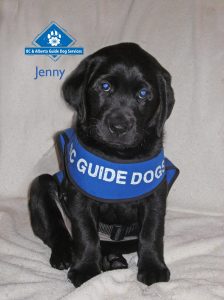
Happy birthday, Jenny! If I Could… I’d Give you Cake

04 Saturday Mar 2017

Posted by blindbeader in blindness

≈ 12 Comments

Tags

guide dogs, independence, life lessons

Click here to listen to a reading of this postDownload

Dear Jenny,


I wake up this morning, like any other, and realize that nothing has changed. You wake up with a stretch and a yawn and a dozen enthusiastic tail wags and a scratch and a vocal cue that it is really time to go outside now… and nothing has changed for you, either.

But Jenny, my wonderful, enthusiastic, sassy, intelligent, impulsive, quirky guide dog… You’re FIVE YEARS OLD today! You may not know the significance of this day, beyond the fact that today you get to go for a long run in the dog park (weather permitting), get to spend some time hanging out with some of your favourite people, and enjoy a brand new beef bone and a brand new squeaker ball… but even the idea of this day leaves me breathless.

It started about a month ago on the bus. I get asked regularly about you, Jenny… about what breed you are and how long we’ve been a team and how old you are. The first time I uttered the phrase “She’ll be five in…” I couldn’t believe what was coming out of my mouth.

Five years old!

But it’s more than this.

About the time I started realizing that your FIFTH birthday was coming up the very same week I started a shiny new job, I looked back at our journeys and how truly, truly interconnected they really are, and always have been.

Let’s remember, shall we?

Jenny at 7 weeks old

Jenny at 7 weeks old

When you were born, on March 4, 2012, I was working in an office at a job I loved fiercely. What I didn’t yet know was how much my job would change over the next couple of weeks. I still loved my job, my coworkers, and some of the new changes… but I wasn’t doing the job I was originally hired to do. These changes opened up doorways to my future, just as you would in the years to come; they also gave birth to the advocate in me, something I would need when fighting for access rights, employment, and personal autonomy.

Jenny at 6 months old.

When you were six months old – getting bigger, learning new things, eating pages out of library books – I knew my time at that job would soon come to an end. Growing is painful, and necessary. Change is painful and necessary. But As I was struggling and wriggling out of the safe cocoon of that long-time job, you were getting bigger and changing and taking steps forward and backward and forward again. By the time you turned ten months old, I had turned my face to the wind and waited to embrace new employment opportunities.

Jenny at 10 months old

You grew bigger and stronger, still curious about life. You lost interest in library books and gained interest in training. You made mistakes but were given the opportunity for another chance to make things right. I’ve since learned how very very important this is to you.

jenny-in-chinatown-in-front-of-post-with-asian-writing

You started advanced training in May 2013. At this time, after months of searching, I started work at a call center for a pizza restaurant. I enjoyed the work and the flexibility it offered (enough flexibility to enable us to train together and still keep my job). I know you enjoyed time with your boarder and her dog and time spent with your brother and the other dogs in the training van – everyone told me so.

I got the call that you and I were a match just two days before my birthday. I couldn’t think of a better present. That summer was a challenge for our little family, but we were all excited about welcoming you to it.

I remember our first walk – just after our first meeting – like it was yesterday. You went FAST! This little spitfire of a black lab was going to give me a run for my money. All I remember thinking was… why is this dog swerving? When I learned that you were avoiding all of those poles along the sidewalk that my cane hit on a regular basis, just because that’s what you were trained to do. Our speed, your precise movements… I knew you were the best dog for me. We started training the day before you turned 18 months old.


From that point on, we’ve been a team. Sometimes we’ve been so in tune with each other that I can’t believe we’ve only known each other for 3.5 years – think running along the paths of our neighborhood, our trip to New York City, or going through a sudden job loss and more job interviews than I can count. Sometimes our communication clearly sucks – one of us clearly doesn’t want to listen (and usually it’s me). You communicate so effectively that I swear you could learn English if you wanted to – from telling me a best friend is at the door, to signalling your painful allergy symptoms, to groaning your boredom during long meetings… no one needs a Jenny dictionary. You’ve made dozens of friends – both human and dog – and won them all over with your charming personality, your big brown eyes, and open heart. You may never understand what you’ve brought to me. Even this past week in navigating a new office, you’ve impressed me with your willingness to just go with your gut and see if we’re going the right way – and by the end of the week, we’re not lost in a maze of hallways and cubicles anymore.


Jenny, my girl… I want to be just like you when I grow up. I want to love my routine but be ok with sudden changes. I want to make snap decisions, right or wrong, and follow the path I take – because my gut (and yours) is usually right. I want to love openly and completely, with no reservations, qualifications, or expectations beyond time, presence, and returned affection. I want to be so joyous that the world will know that it’s a beautiful place… and I want my joy to be so evident that a rare grumpy day will be just as obvious.


I wouldn’t be the woman I am today without you. As much as guide dog training taught us to work together, you taught me even more about life. You’ve taught me to let go of my rigid expectations, to go with the flow. You’ve shown me that you can make mistakes – even big ones – and learn from them if you don’t give up. You’ve shown me that it’s OK to be scared but to face your fears anyway. Over the years, we’ve faced some scary situations – from cars pulling out in front of us, to a fight breaking out around us, to the sudden sound of automatic hand dryers. We’ve been through them together. You’ve literally saved my life more than once – from speeding buses or creepy people who want to pick me up at bus stops. You’ve left such a mark on my life and my heart that just last week I got a tattoo of your pawprint with your name inside it. It’s a visible reminder of all the things you’ve given to me so selflessly. I can’t wait to see what the next five years of our journey will bring!


Since I can’t give you cake, a ball and a wrestle and a snuggle will have to do. But it doesn’t seem nearly enough.


Happy birthday, Jenny Pen. Here’s to many more.

With all my love.


P.s. HUGE thanks to BC and Alberta Guide Dogs, Jenny’s puppy raisers, boarders, trainers, my husband, friends, and family, and all of those who’ve loved her along our journey.

P.p.s. Pictures courtesy of BC and Alberta Guide Dogs.

Relax! It’s Independence!

22 Friday Jul 2016

Posted by blindbeader in blindness

≈ 3 Comments

Tags

advocacy, autonomy, dignity, disability, fear, hard truths, independence, perceptions, service dogs

All the way through high school, I traveled with a white cane. I would move the cane in an arc on the floor no wider than shoulder width (as I was taught), sometimes even narrower than that. You’d think I’d brought and aimed a weapon or set someone’s hair on fire, the reaction was so intense. Students would jump over the cane, slam themselves and their buddies into lockers to get out of my way. My friends thought it was hilarious, but it was probably the first time I seriously felt that people were afraid of me for something that, to me, meant independence and freedom. Since then, I’ve been made aware of huge crowds of people parting the waters because a blind woman with a cane has started walking through a mall during the holidays or a concert venue at intermission. Sure, it makes my life easier, having a clean path, but it’s always made me feel somewhat “other” when it’s announced or otherwise apparent that a path is being cleared for me so that I don’t hit anyone.

Fast forward several years, and Jenny, a wonderful, communicative guide dog wiggled her way into my life. Her presence means that I can travel more fluidly than I ever could with the cane, can even run independently (something I never thought possible). Not everyone likes dogs – some are afraid of being bitten or licked or approached by a dog – and I understand that. If my dog gets invasive, obnoxious, causes a direct disturbance not related to her being a dog doing her job and people being fascinated by her, that’s one thing (all service dog handlers have had moments where their dog’s behaviour has made them want to melt into the floor). But in the span of a week this past spring, I experienced two instances where the mere presence of my dog has caused people to publicly overreact in ways they probably hadn’t intended.
I was sitting on a bus, minding my own business, when the doors opened and a man got on. He turned to walk to an empty seat, saw my dog, then went back to the bus driver and said that he would get on at the back of the bus so he didn’t have to “go past that dog”. I was so shocked I couldn’t say anything. If he hadn’t seen my dog, he’d never have known she was there on the bus. And before anyone raises the “allergies” argument… I’ve worked with people who have allergies, have friends who have allergies, have had strangers discretely tell me they have allergies so that I know to make 110% sure that my dog’s nose is where it belongs, that she’s out of their way, that the risk of contact is as minimal as possible. I have never felt by any of those people as disrespected as I did that day on the bus…
Later that week, I went shopping with a couple of friends and had a lovely time trying on clothes, finding some bargains, and laughing uproariously at a couple of items that fit just slightly wrong enough to be hilarious. After paying for my purchases, Jenny and I were making our way to the exit when two young women more than twenty feet away started screaming that there was a DOG in the store! I chose to redirect Jenny to go a route that didn’t intersect their path, and she handled it with professionalism and grace, but I was so shaken up that two people felt the need to publicly vocalize their fear when my dog and I were doing absolutely nothing to them. At the time, I thought that no one would react similarly to the presence of a wheelchair, but I recently discovered this article that makes me think that such instances happen more frequently than I ever considered.

Last week, I went into a store to return an item. Jenny and I walked up to the counter behind another customer, who very abruptly asked the clerk to ask me to move my dog. I took several steps back out of her way, waited my turn, then walked up to the counter while the other customer walked the looooong way around to exit the store. The clerk told me that the instant she saw my dog, her face just tensed right up. For some reason, it really hurt. It was yet again one more instance proving that I am still considered “other” because I use a dog to travel independently (and if I used a cane I’d get griped at for hitting someone in the ankles).

Why are we so feared? And why is it acceptable? Why did I feel so helpless, like I couldn’t just turn around and ask some of those people if they had something to say directly to me? If someone expressed discomfort with or fear of someone’s race or gender or place of origin or religion, they’d be called out for what they are – homophobic or zenophobic or racist. But because the presence of a disabled body in public is so rare and unexpected, manners go out the window? And that’s acceptable?

So the next time you see someone using a cane for identification or mobility, a guide or service dog, a scooter or a wheelchair, unless they are directly interfering with your ability to go about your day, keep your mouth shut and your fear to yourself. If you want to know how we go about our days so bravely, imagine frequently encountering the fear of others, publicly, and think how you would feel if you had to go through that. We want to go about our days just like you. And you wouldn’t like it if we told our friends that we didn’t want to sit next to a non-white, Hindu man minding his own business on the bus, or freaked out because a woman wearing a head scarf happened to be shopping in the same store as us. You’d tell us to relax… it’s only a bus seat, only a head scarf. Guess what, when reacting to our presence? Relax! It’s a cane, a wheelchair, a dog. Relax: it’s independence.

Book Review: For the Benefit of Those who See

29 Monday Feb 2016

Posted by blindbeader in Book reviews, Nonfiction

≈ 4 Comments

Tags

ambassadorship, blindness, Books, dignity, education, independence, respect

One of my blog’s most consistently viewed posts is this one, regarding the portrayal of blind characters in books. Because of this, I’ve decided to do a monthly book review, alternating between fiction and nonfiction, beginning with this book that created quite a stir in the blind community when it was first released.


For the Benefit of Those who See

By: Rosemary Mahoney

I chose to review this book because of this article that made the rounds of social media nearly two years after its publication. I found it well-rounded and compassionate, at great odds with reviews of this book. After mentioning this disparity  to a friend, I realized that I needed to read the book, to form my own opinion. Nearly a month after putting the book down, I still find myself incredibly conflicted by it. How can I be so awed by some beautiful friendships and inspired by the resilience of many of the blind students, yet put off by some of the awkward and inappropriate behavior and the fixation on everyone’s eyes?


Some Unnecessary Detours


The introduction to this book begins with a rather graphic description of an eye surgery. This is not for the squeamish. Perhaps the author uses this to reminisce about her own temporary blindness, how scared she felt. Then she uses this as a springboard to how she got involved with Braille without Borders. The first couple of chapters tend to jump around unnecessarily; I honestly found myself not caring about Rosemary herself, as her own experience of blindness was temporary and she was able to go back to her sighted life, with a seemingly perpetual fear of blindness itself. Later in the book, she describes the perception of the blind in wider western society, beginning in the eighteenth century and ending midway through the twentieth. The placement of this information was between the two sections of the book (the school in Tibet and that in India), which was quite logical, but the author didn’t cite any historical data from eastern countries, nor did she truly address the strides that have been made in western society in the past sixty years. It appeared that she viewed her ideas through the lens of a contemporary western chronicler, while not really addressing many of the true social realities that have historically been lived in the east. In these ways, the book takes off on tangents that may be informative as their own volume, but were cobbled together as a west-meets-east education model that doesn’t truly convey either particularly well.


I Did Find Inspiration Here


Unlike many other reviews by blind people, I did find myself truly awed by some of the students and their friendships portrayed in this book. I chuckled at the seriousness of the 12-year-old braille teacher, was touched by the young girl who persistently physically refused to allow a classmate to disengage by constantly praying for a cure, laughed out loud at the friendship of two loud and rather bawdy students at the school in India. Two young girls took Rosemary through a crowded Tibetan square, and showed her how they used their other senses to determine where they were; they were neither self-pitying nor constantly happy, yet they simply gave Rosemary the information they had. I was awed by many of the blind students’ resilience, not because they got up and got out of bed in the morning and did what they had to do with little or no vision, but they did so in a society that truly didn’t know what to do with them, and with little or no governmental or family assistance, sometimes fleeing truly abusive family environments.


But… But…


Some of the behaviors described in this book were truly cringe-worthy. I would hate to see any other group of people walk around with tea streaming down the backs of their shirts, waving long sticks around, crying out how glad they were to be (insert disability/race/gender here). It baffles my mind that in one breath, the heart-warming friendships and terrific adaptability of the students are wonderfully depicted, then in the next some of these same students are acting with the social grace of a toddler. It surprises me that a confident blind woman who runs the school would not address these behaviors; if she had, perhaps the author could have described the strides the students were making as she did with their computer learning. But as it stands, my western mind just can’t compute the disparity, especially in countries and cultures where cleanliness and propriety are quite important.


Educational Advantage


Two schools are described in this book. They provide food, shelter, and education for blind students, both children and adults. My opinion on blind schools has been documented here, and yet I applaud the author’s ability to detail the complex nuances and ironies at play for blind students in Tibet and India. In cultures where families run farms, and sighted children work on the farm, their blind child/sibling has an opportunity for an education. It’s one of the few times in which blindness has its own unique advantage.


Fixation on Eyes


I grew very uncomfortable with the author’s seemingly endless descriptions of people’s eyes. Many blind people wish we could make eye contact, but are uncertain how best to do this appropriately. Some of us are self-conscious about how our eyes appear to others, and based on the never-ending descriptions in this book, we have every right to be. Very few, if any people, were described as having nice eyes, and it appears that those who did have “normal” eyes had their blindness questioned by the author because of their confidence and social normality (see above). If eyes are the window to the soul, I’d hate to think of how soulless we are.


Conclusion


There are some nuggets of beauty in this book. Unfortunately, they are dispersed throughout outdated, unnecessary, and demeaning information. Even now, more than a month after concluding this book, I can’t seem to get it out of my head. As someone who lives in the “world of the blind”, I object to the characterization of us – of me – based on what my eyes do or don’t do, and the truly horrid manners exemplified in these pages. And yet, I draw inspiration, perhaps as the author intended, from the depictions of deep friendships, of learning despite the naysaying of family and society, of falling down and getting back up. I am glad I chose not to throw the baby out with the bathwater, but that bathwater is truly quite murky.


2.5/5 stars.


If you have any book recommendations, or wish me to review books more or less frequently than monthly, please comment below!

← Older posts

Subscribe

  • Entries (RSS)
  • Comments (RSS)

Archives

  • January 2024
  • December 2023
  • April 2023
  • January 2023
  • December 2022
  • October 2022
  • June 2022
  • April 2022
  • January 2022
  • December 2021
  • October 2021
  • August 2021
  • June 2021
  • April 2021
  • March 2021
  • February 2021
  • January 2021
  • November 2020
  • October 2020
  • August 2020
  • July 2020
  • June 2020
  • April 2020
  • February 2020
  • January 2020
  • December 2019
  • November 2019
  • September 2019
  • March 2019
  • February 2019
  • January 2019
  • December 2018
  • September 2018
  • August 2018
  • July 2018
  • June 2018
  • May 2018
  • April 2018
  • March 2018
  • February 2018
  • January 2018
  • November 2017
  • October 2017
  • September 2017
  • August 2017
  • July 2017
  • June 2017
  • May 2017
  • April 2017
  • March 2017
  • February 2017
  • January 2017
  • December 2016
  • November 2016
  • October 2016
  • September 2016
  • August 2016
  • July 2016
  • June 2016
  • May 2016
  • April 2016
  • March 2016
  • February 2016
  • January 2016
  • December 2015
  • November 2015
  • October 2015
  • September 2015
  • August 2015
  • July 2015
  • June 2015
  • May 2015
  • April 2015
  • March 2015
  • February 2015
  • January 2015
  • December 2014
  • November 2014
  • October 2014
  • September 2014
  • August 2014

Categories

  • Blind Lady Gets Sh*t Done
  • blindness
    • My Sorta Kinda Maybe (In)accessible Life
  • Book reviews
    • Fiction
    • Nonfiction
  • Epic Road Trip of Awesome
  • Exploring Edmonton
  • Finance Friday
  • Guide Dog 2.0
  • New York vacation
  • The Empowered Series
  • The Intrepid Journey 2018
  • Ultimate Blog Challenge
  • Ultimate Blog Challenge, Part 2
  • Ultimate Blog Challenge, Part 3
  • Uncategorized

Meta

  • Create account
  • Log in

Support my blog!

Buy Me a Coffee at ko-fi.com

What’s gotten folks talking?

Carol anne's avatarCarol anne on Guide Dog 2.0: One Year L…
Carol anne's avatarCarol anne on Guide Dog 2.0, One Year Later:…
Carol anne's avatarCarol anne on Guide dog 2.0, One Year Later:…
Carol anne's avatarCarol anne on Guide Dog 2.0, One Year Later:…

Enter your email address here and receive new posts by email!

Join 207 other subscribers

Blog at WordPress.com.

  • Subscribe Subscribed
    • Life Unscripted
    • Join 207 other subscribers
    • Already have a WordPress.com account? Log in now.
    • Life Unscripted
    • Subscribe Subscribed
    • Sign up
    • Log in
    • Report this content
    • View site in Reader
    • Manage subscriptions
    • Collapse this bar
 

Loading Comments...