• So, who am I, anyway?

Life Unscripted

~ Living Life as I see it… or Don't

Life Unscripted

Author Archives: blindbeader

The Empowered Series: Abigail Style

15 Sunday May 2016

Posted by blindbeader in The Empowered Series

≈ 2 Comments

Tags

beauty, blindness, disability, perceptions

One of the most interesting things about being a blogger is the ability to reach and be reached by a ton of different people. As part of the Empowered series, meet Stephanae McCoy, owner/operator of Abigail Style, who wishes to use fun, everyday products to show, visually, that blindness does not mean a lack of confidence and/or fashion sense.


About Stephanae

Stephanae (Steph) McCoy is a retired 55 year old mother to three grown sons and a ridiculously cute 3 year old grandson whom she’s “just ga-ga over”. According to the Meyers Briggs Personality Assessment she’s a true INTJ who is an introverted, analytical, somewhat judgmental and intensely focused person who follows the rules. If you ask her sons, she says they would probably say she’s a buzz-kill but with a great sense of humor, who loves playing practical jokes on people she’s close to and seeking change especially when someone is being treated unjustly.
Steph’s vision impairment was diagnosed in 2005 after regular vision checkups, which meant that some conditions such as glaucoma were caught early but needed operation. Seven years ago she had “The talk” with a doctor at the Cleveland Clinic, who advised her that even though she did all the “right things”, due to surgeries and extreme myopia, her vision loss was irreparable.

About Abigail Style

Abigail Style (named after the white cane icon Abigail) is an online apparel and novelties boutique whose message is designed to “Improve humanity by changing the way blindness is perceived. All Abigail Style products carry her signature stylish image and fun slogans. Currently the products offered are women’s, men’s and children’s t-shirts, women’s tanks, coffee mugs, tote bags and iPhone 6/6s cases. Artist Jennifer Barrile designed the logo, and Steph created the images to be printed on the products.
Abigail Style has been open for business for a very short time, but in the future the hope is to hire a marketing director, social media strategist, and a stylist, and increase the product line to include posters, decorative pillows, and baseball caps.

Why Abigail, and What got Her Started?

There are so many stylish women who are blind or have sight loss that Steph felt it was time for a fashionable icon to represent them. Abigail is a beautiful image that evokes power, movement, independence, chicness, confidence and success, a woman on the move stepping forward with purpose.
After Abigail was created Steph reached out to her online community to request their input on a name for her. Abigail was chosen as a play on the word “abilities,” and Nightingale (the small bird that’s known for its beautiful song) – since it looks like she is wearing a divine feather dress.”

What’s Next?

Steph wants to see how far she can take Abigail as she believes the sky’s the limit. Blindness or sight loss has always been one of those taboo topics and it’s time to change this. Is it challenging for people who have previously seen to learn how to adapt to sight loss? Yes it is, but a meaningful life shouldn’t be dependent upon having eye sight and she hopes to see the negative mindset on blindness and sight loss diminish.
Once, an eye doctor told Steph that it would be a tragedy for her to learn how to use the white cane when in fact she believes the real tragedy is the shame many people feel when losing their eyesight. Having a visual image that evokes beauty, confidence and purpose is a way to change the stigma surrounding blindness and/or vision loss.

Conclusion

I want to thank Stephanae for being so open with me, and for taking the time to answer my nosy questions!
If you know someone with a disability who runs their own organization or business, please leave me a comment or find me on Twitter; I would love to feature them here. The word “inspiration” is so often used to describe us, but empowerment is what we do for ourselves.

MY job is better than Yours!

06 Friday May 2016

Posted by blindbeader in blindness

≈ 4 Comments

Tags

autonomy, employment, respect

You’d think – after more than 30 years on this planet and having had a ton of really really stupid things said to me – that I would learn not to stick my foot in my mouth. Not so much.

Last week, I posted on Twitter about a topic that is close to home – employment. I had recently seen a blindness organization posting work-from-home opportunities, as well as openings in their industrial shop. I asked why this is, that it feels like we’re being “hidden away” just to be employed. Others pointed out to me about transportation logistics and the desire of some to work from home. It was never my intent to disparage such things, but it could have come across that way… Because twitter’s strength and its weakness is its brevity, I figured I could explain myself and my viewpoint here on this blog… but I want your opinions, too!

Employment is Essential

I’ve written about this several times on this blog, whether it’s describing my own personal employment journey or the perception of blind people (and those with other disabilities) as inspirational or incapable. Many of us have education, transferable skills, and a strong desire to work, yet get turned down for job after job after job. It is demoralizing and demeaning – not to mention discriminatory – to hear that even though you are more than qualified for a job they have chosen another applicant (usually dancing around the word “disability”). This is where grit and determination come in, sometimes (though not always) aided by organizations that either assist in the job search for applicants with disabilities or provide work opportunities themselves. For those whose disability makes it possible, employment brings a sense of accomplishment, contribution and dignity. So why can’t I just be happy that people with disabilities are being employed… by someone?

The Home Office

The modern workplace is ever-changing. Some companies allow employees to telecommute (work from home) on either a permanent or situational basis, providing employee flexibility, lower office overhead, or the ability of employees to care for loved ones. So it comes as no surprise that some disability organizations subcontract workers for these jobs. It’s a perfect solution for those who prefer to work from home, or who have transportation or logistical challenges to come in to an office every day, or whose disability makes telecommuting the difference between being employed or relying on government assistance. And with the disability organization providing or advising on accessible technology for a disabled client/employee, it’s a win-win… right?

Separate Work Spaces

Some organizations provide workplaces (sometimes called sheltered workshops) where people with disabilities can be employed (primarily alongside other workers with disabilities), learn new skills, and be promoted (something that may be more of a challenge in the public sector). It can provide a sense of accomplishment, comraderie,  and usable employment skills, not to mention – in theory – the ability to earn an income. But some workplaces (Goodwill comes to mind) have paid their disabled workforce sub-minimum wages. This is not the case in all facilities, but it happens enough to be a real concern. This begs the question: is separate really and truly equal?

One Size Does NOT Fit All

It was rightly pointed out to me that it appeared my initial concerns about being “hidden away” by working at home or in blindness organizations came across as unyielding. It was never my intent. If someone wishes or needs to work from home and/or in a disability-centered organization, it should be their choice to do so. But it is by no means the only way for people with disabilities to obtain meaningful employment. Many disability organizations – particularly those who assist in the job search process – have clients who are happy working, no matter the pay, the job duties, or the employer; others have very specific goals, educational background, and salary expectations. Even if it’s not easy, organizations that assist people with disabilities on the job hunt need to be very aware that both types of people exist, and many fall somewhere in between. It is essential that all who wish to use these services feel welcome, like they are being heard, and not like they’re being shoved into a little box that over- or under-estimates their qualifications, setting them up for failure.

Conclusion

I’ve heard horror stories about highly-educated people with disabilities being referred to a job as a Walmart greeter. I’ve experienced first-hand the frustration of asking for advocacy assistance from disability organizations, only to be told to just take whatever job came along because they didn’t know what to do with me. I am not thumbing my nose up at anyone who works from home or in a sheltered workshop if it is their choice to do so and they are happy, healthy, and believe their work has value even in small ways. But it is not what I want for myself, simply because I like to separate my work from my home life, and I – and anyone with a disability – should be given the opportunity to be “out there” in public if that’s our choice.

So if you work from home and like it? I’m thrilled for you! If you work with other people with disabilities and love what you do? Rock on! If you work in the public sector and have found acceptance there? Keep it up!

For those of you who work in the disability field – teachers, employment counselors, advocates, social workers, even family members – really listen to the disabled children or adults with and for whom you’re affiliated. They may have hopes and dreams and fears that you haven’t considered, and they need you to listen to them and act accordingly. We live in our bodies, we know our minds; we know our capabilities. We likely know the employment situation that is best for us, and should have the freedom to reach for the stars – whatever constellation strikes our fancy.

Book Review: “The barefoot Lawyer

30 Saturday Apr 2016

Posted by blindbeader in blindness

≈ Leave a comment

No one is saying that there aren’t problems being a blind person in the western world; from high unemployment rates to ignorance of our skills to access refusals with our guide dogs, no one can say that being blind is easy. But what if you lived in a country with a government whose interest truly is themselves and you can be thrown in jail for speaking out?

The barefoot Lawyer

By Chen Gwangcheng

For years I’ve wondered what it’s like to be blind in another country, particularly one with different access challenges than those faced in the western world. Sure, there’s this book that details a sighted person’s perspective teaching at blind schools in Tibet and India, but very few first-hand experiences translated into English. So I bought this book and read it on a recent trip. As soon as I plugged in my headphones, I was taken away to rural China and the life of Chen Gwangcheng.

Publisher’s Summary

It was like a scene out of a thriller: one morning in April 2012, China’s most famous political activist – a blind, self-taught lawyer – climbed over the wall of his heavily guarded home and escaped. Days later, he turned up at the American embassy in Beijing, and only a furious round of high-level negotiations made it possible for him to leave China and begin a new life in the United States. Chen Guangcheng is a unique figure on the world stage, but his story is even more remarkable than anyone knew.
The son of a poor farmer in rural China, blinded by illness when he was an infant, Chen was fortunate to survive a difficult childhood. But despite his disability, he was determined to educate himself and fight for the rights of his country’s poor, especially a legion of women who had endured forced sterilizations and abortions under the hated “one child” policy. Repeatedly harassed, beaten, and imprisoned by Chinese authorities, Chen was ultimately placed under house arrest. After nearly two years of increasing danger, he evaded his captors and fled to freedom.
Both a riveting memoir and a revealing portrait of modern China, this passionate book tells the story of a man who has never accepted limits and always believed in the power of the human spirit to overcome any obstacle.

A Brief note on Audio

I almost threw in the towel after the prologue. The narrator, David Shih, is a competent narrator for this book, but there are portions of the book that are written from the point of view of Chen Gwangcheng’s wife. The producers of this audiobook chose not to have a woman narrate those small portions of the book, but with no verbal indicator that the point-of-view change was occurring, it was very disorienting to have an instant scene switch. This only happened in a couple of spots throughout the book (particularly those describing the escape), but it is worth considering if you choose to listen to the audio.

Early Life and Education

The author details his life in straightforward prose. His family had him do farm chores; his brother taught him to identify trees by feel, and with the exception of education he was treated like every other member of the family. Even when he went to school and received training to read, write, use a computer and travel independently, his family was as supportive as they could be at a distance; they saw what happened to many blind people in the countryside making a living as storytellers and relying on the kindness of townspeople for food and lodging. He is neither self-pitying nor self-congratulatory, simply describing the way things were. This lends the book a sense of honesty and yet emotional distance that in my opinion is a great strength and yet its biggest downfall.

Advocacy Work

After graduating from college, Chen Gwangcheng became what he calls a “barefoot lawyer”,similar to what we in the west would call an advocate – he would go to court to demand rights for people whose rights had been violated, but he didn’t have formal legal education. In China, Chen Gwangcheng says, it’s not uncommon for the government to break its own laws, particularly as it comes to blind people, because they believe blind people wouldn’t be able to fight back. At one point in his advocacy work, he was thrown into jail for years and then held under house arrest, during which time he was unable to openly communicate with the outside world, his wife was beaten in front of their daughter, and his son lived with his grandparents far away.

Family Life and the Support of Others

The author does an admirable job of explaining his family dynamics, from his earliest memories of his family and their sacrifice so he could attend school, to his wife’s family’s opposition to their marriage. His family may not have done all the “right” things according to all the information we have, but they did better than most with the knowledge they had about blind people. His wife ultimately laid down the law with her family that this was the man she would marry, something unheard of in rural China

Chen Gwangcheng also chose to learn as much as he could from others, relying on their assistance as needed only until the point that he could do things for himself. During his escape, he relied on his own knowledge of his neighborhood – primarily provided from his wife – and the assistance of others. It was partly his own tenacity, patience and willingness to take chances and partly the kindness of others that ultimately got him out of China. He has no difficulty describing what he did himself and what he hoped others could do for him, simply because that’s the way it is and his life depended on it.

Emotional Distance And Unresolved Conclusion

I stated this earlier in this blog post. There is something emotionally distant about this autobiography. Whether this is because it’s how the author himself details things or whether it’s cultural, I couldn’t say. But it makes this book shine the brighter, even as it lacks emotional language. It’s not that it’s flat, it’s just that things are told matter-of-factly about feeling frustration or despair without the emotional component of so much western writing.

The book also ends once the author arrives in the USA, leaving it somewhat unfinished, as he arrived in 2012 (three years before the book was published). This reader would love to know what he’s doing now, how his family is, and what his future looks like to him.

Conclusion

A well-written, generallly well-read book about being a blind man – a barefoot lawyer – in contemporary China. 4/5 stars.

Satire: Choosing a Guide… Criminal?

22 Friday Apr 2016

Posted by blindbeader in blindness

≈ Leave a comment

Tags

autonomy, bonding, dignity, humour, respect

It happens every day. A video is posted on facebook and a zillion comments follow. Against my better judgment, I read some of the comments on one of these shares. Interspersed among comments wishing that more video was shown of the dog to the “awwwww doggie!” responses was a group of people who expressed that it was cruel for dogs to be “enslaved” to serve people, even people with disabilities that “need extra help”. I’ve never met one of these types (at least one that acknowledged it openly), but many of my friends have. What surprised me was a comment stating that it was not only cruel of us as humans to force dogs to work for us, but that criminals should be trained to provide guiding services to blind people.


OK, so forcing a dog to work for love and praise and pets and treats and constant companionship is cruel… but forcing a blind person to be at the mercy and whim of another person – criminal or not – is completely logical? And training a released criminal to perform guiding services at the whim of a blind person is not enslavement? Oooookay. Let’s run with that line of thinking. If someone chose to do this… how would one be matched with a guide criminal?


Which institution will train your guide criminal? It would be advantageous to select an institution close to home, because there’s no way a blind person can travel independently before they are matched. So blind people should all live in the basement of their chosen training jail or prison, and in the event that’s not possible, they should at least live next door, with no tricky streets, steps or any changes in elevation more than 1/16 of an inch. Ideally, the jail or prison should screen their guide criminals carefully, produce capable trainees, and make sure they are trustworthy people, but the fact they’re there at all should be sufficient reason for blind people who are recipients of their trained guide criminals to weep and genuflect in gratitude. I’m sure there will be studies eventually, but what previously-enjoyed activities would increase the success rate: embezzlement, robbery, assault, drug possession, driving under the influence of alcohol? And would it be expected that a guide criminal should be able to continue to enjoy these activities post-placement, even if it might put the blind person at risk?


What attributes would be preferred? Sure, compassion is one; they need to love what they do in support of the poor poor blind people of the world… But what about reliability, personality, habits, age, gender… I mean, this person is supposed to be on-call for guiding duties 24/7 in the unlikely event that a blind person would actually want to go somewhere. So you’d want someone with a good enough work ethic to – at a moment’s notice – keep a blind person safe from creepy people, from falling down stairs, or from looking or acting normal in any way… but they can’t be reliable enough to hold down any other job after all of that training in case the blind person needs their services. How much do you tell a blind person about their guide criminal’s life pre-placement? They shouldn’t care, but occasionally one of them might ask about their great skills or bad habits or health problems or family background or why they would want to be a guide criminal in the first place.


The logistics of working with a guide criminal… What if they get distracted and wish to go on a hot date with that attractive person across the street? Would they need to bring their blind handler along for this date? What do guide criminals eat? Where would they sleep? Does anyone cover medical expenses in the event they get sick and can’t work? What behaviors or health conditions would make a guide criminal no longer fit for service? Since blind people are incapable of deciding things for themselves, who decides if a match just isn’t working out?


I don’t think the guide criminal lifestyle is for me… I’m off to enslave my dog by taking her for a run around the neighborhood, followed by a seriously good game of fetch, a big bowl of fresh water, and a snuggle on my bed. Doing such things with a guide criminal would be… really creepy. But, hey, thanks for indulging my catharsis in imagining a life where conscripting the time, dignity, and autonomy of not only blind people but post-released criminals is a thing…

“But… You Don’t Look Blind”

15 Friday Apr 2016

Posted by blindbeader in blindness

≈ 2 Comments

Tags

anger, perception

“You don’t look blind.”

Every blind person I know has heard this comment – or wishes they had – at one point or another. Since it’s a common comment with wide-ranging social implications and viewpoints by the recipient, a blog challenge went out to several friends on Facebook. Once this post is published, I will link to the others’ posts at the bottom of this one. I’ve never done a “blog challenge” before, so here’s my first!


Who Gets this Comment?

Almost every blind person I know has received it at one point or another, especially those whose blindness is caused by genetic vision loss rather than the result of surgery, illness, or trauma. Even if the blindness is visibly obvious, if a blind person does something or expresses an opinion that involves a degree of “advanced competence” or normality, it isn’t unusual for those words to follow. It is often given by strangers when we’re out doing ordinary things like shopping or crossing streets or applying for jobs…

Is it a Compliment?

these words are meant by many as compliments, similar to “I forget you’re blind!” But denying the reality of someone’s blindness, or acknowledging that they would be treated differently because of it, is rather insulting, no? And just because you fear living your life with blindness (it’s a well-documented fear) doesn’t mean that those of us who live with blindness or visual impairment – cannot be happy, competent, “normal” people. So whether we look blind or not… what difference does that make to you? You don’t look ignorant…

Broader Implications

Many friends with vision impairment that’s not visibly obvious have been told that they don’t require accommodations due to the fact that they aren’t “disabled enough”, get questioned when they enter public buildings with service dogs, and basically have to prove that they require the supports they need. For someone such as myself, no one questions the fact that I can’t see, but expresses shock at my hobbies, job history, or desire to live a “normal life” (the nerve of me!). So blind people get the short end of the stick on so many levels: we’re either visibly blind and are objects to be pitied or belittled or scorned or asked endlessly what happened to our eyes, or we don’t “look” blind and don’t deserve the accommodations to live our lives as productive consumers, employees, or citizens. Sometimes I wish I could hear “You don’t look blind”, but then I realize that it really isn’t a compliment… having to prove a negative – that I can’t see. And if you expect someone to identify themselves as blind by anything more than a cane or guide dog to travel safely… I seem to recall a system of forced self-disclosure about seventy years ago in Germany…

Why can’t I just Take it as Intended?

Part of communicating, and doing so effectively, is that the giver and receiver of communication both process it as intended. It isn’t easy to be public property, and everyone seems to have an opinion on what I look like, what activities I can enjoy, and if I can travel safely by myself) just because I am blind, and I look like it. I don’t have the time and mental energy to get angry at everyone who tells me how great it is that I have the teeny tiny bit of vision that I do (as though my life is more valuable than someone with none), who asks what happened to my eyes, who thinks there’s no way I can be competent and happy. Not everything is worth nitpicking over, because not everything is a fight. And yet… I am angry over something that’s supposed to be complimentary. Maybe it’s a bit of jealousy that my blindness is never ever questioned. Maybe it’s frustration over the fact that I am blind and travel with a guide dog (and before that with a cane) that makes me highly visible. Maybe it’s the fact that because I look blind I get treated like a child, and if I didn’t I would have to actually convince someone that I am blind because I am independent, competent, and can think and act for myself. So, yes, I am angry… Wouldn’t you be?


Other Perspectives

Thanks to those who’ve taken up this challenge as well. It’s not my challenge, but am glad for the alternate points of view. It makes for a nuanced discussion on this topic.

Charlie lives in the land of the visually impaired, too “blind” to be considered sighted and too “sighted” to be blind.”

Lauren describes conversations she has frequently and discusses the importance of not judging a book by its cover… or, in this case, a disability status based on outward appearance.

Ashley isn’t  offended by the comment itself, but the accusations of fakery followed by outright disrespect and discrimination that follow.

If at all possible, Buddy is more polite and more assertive than just about anyone on this topic.

Meagan asks an important question: What, exactly, does “blind” look like? And if you can’t answer that question reasonably…?

First They Denied Access…

09 Saturday Apr 2016

Posted by blindbeader in blindness

≈ 1 Comment

Tags

access, blindness, dignity, disability, discrimination, guide dogs, hard truths, respect

Earlier this week, my friend Meagan wrote a brilliant blog post about selective discrimination. If you haven’t read it yet, you should, because it’s important. I had full intentions of writing about a similar topic from another angle; thankfully she is gracious enough not to point out that SHE wrote about it first…

Over the past six months or so, since becoming more involved in the disability rights movement and meeting more people, I’ve come face-to-face with some of my own ideas about disability, access, and availability of information. People with a wide range of disabilities – those who are deaf or hard of hearing, who use wheelchairs, who are on the autism spectrum, who live with PTSD – have been far more patient than I deserve. I’ve had my own sense of privilege pointed out – just because I have access to something doesn’t mean that everyone does, and how dare I sit back and be content that I have access to facilities, employment, or information, when the fight for equality is far from over for everyone else? If you live with a disability, and even if you don’t, I hope you’ll consider the next few paragraphs carefully, make whatever necessary changes in yourself, and realize that it’s up to you and me to make things happen, even if it doesn’t directly benefit us.

Let’s start with a few examples. Several followers on twitter have recently opened up a huge discussion about a popular podcasting website that provides audio posts for their blind followers, but delays (if it publishes at all) the publication of transcripts so that deaf or deaf-blind followers can follow along. Many blind people are pushing for TV networks and video-on-demand services like Netflix to provide descriptive video, even as closed captioning has been part of TV networks for years now so that those who are deaf or hard of hearing can more fully enjoy movies and TV programming. In either example, many of those who have received access to the information or service are strangely silent on pushing for others with different accessibility needs to have that same access for themselves. What about physical access to buildings? Just because I have two strong feet and the ability to use them to propel myself forward, how dare I take for granted the ability to walk into any building I choose – a shop, a restaurant, a concert venue – and not even have to think twice about it? Many wheelchair users have to contact restaurants ahead of time to ensure there are ramps to the building, or make sure the seats they purchased for that blockbuster concert are truly accessible. Many are too gracious to point out that we all have our own struggles, but that’s hardly the point now, is it?


Among service dog users, the guide dog is the most commonly recognized. But many other service dogs exist. What gives guide dog users (myself included) the right to police what specific services another’s service dog provides so long as it mitigates a disability? How dare we sit smugly by when other legitimate service dog teams are denied access to public facilities just because we are the privileged and most recognizable? What gives other service dog users the right to tell guide dog handlers how much more training our dogs need than theirs? I’ve seen all of this and more… and it’s ugly. And I’m not even touching on the service dog fakers…


The blind community in and of itself is not exempt from such stances of privilege. There is an outspoken outrage when a guide dog user is denied access to a restaurant, movie theatre, or taxi. Yet, in moments of vulnerability and candor, some blind people who prefer to travel with canes acknowledge that there’s a teeny tiny part of themselves that is grateful that the battle for access isn’t directly related to them. Until this past week when two blind friends using canes were refused entry to a restaurant because the eating area was upstairs, modern instances of service denial to the blind traveling with canes are exceedingly rare. Several of my deaf-blind friends have had blind people question their dignity and right to access information, resources, and employment services. None of these things are right, and no one should ever indicate that discrimination in any form is OK… and yet…


I’m going to go out on a limb and borrow an oft-quoted and paraphrased poem by Martin Niemöller. Maybe this will help the disability community realize that we’re not so different after all, and denying access to some of us should be considered equally as horrible as doing so to all of us:


First they denied access to the service dog handler, and I did not speak out—
Because I was not a service dog handler.

Then they denied access to buildings for the wheelchair user, and I did not speak out— Because I was not a wheelchair user.

Then they denied access to information for the deaf, and I did not speak out—
Because I was not deaf.

Then they denied access and accommodations for the autistic, and I did not speak out— Because I was not autistic.


Then they denied access and dignity to those with PTSD, and I did not speak out— Because I did not have PTSD.


Then they denied access to me—and there was no one left to speak for me.

The Empowered Series: Elegant Insights

03 Sunday Apr 2016

Posted by blindbeader in The Empowered Series

≈ Leave a comment

Tags

business, entrepreneurship, inspiration, taking risks

Believe it or not… some people actually do inspire me. As I have made clear to my readers, I am against the idea of people with disabilities in general (and blindness in particular) being viewed as inspirational for simply existing and going about our days. That being said, I DO feel inspired, and empowered, by people who blaze their own paths through entrepreneurship, creativity, and/or empowering others. As such, I am starting a monthly series on this blog – calling it the Empowered series – featuring an entrepreneur or artist and/or business owner who is blind or with other disabilities. Initially, I had planned this for the 15th of the month, but my first featured artiste is expanding her business through a group fund raiser, and I wanted to give her work some exposure…


Laura Legendary: Elegant Insights

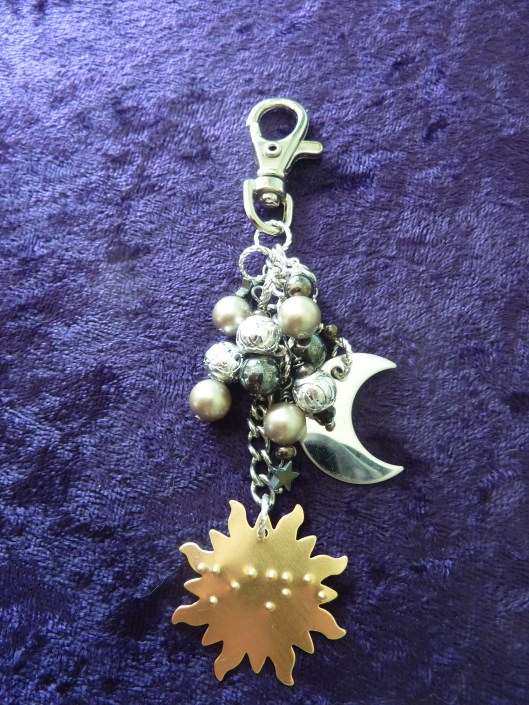
Laura is the driving force behind Elegant Insights Braille Creations. After the sudden death of her husband only months after their marriage, she received a “worry stone” which had the word “survivor” engraved on it. On the other side, the same word was written in braille. The seed of inspiration was planted, leading to a years-long search for companies that provided brailled products that were also fashionable. Nothing quite fit the bill, so Laura started Elegant Insights five years ago, creating necklaces, bracelets, and charms that incorporated braille words like “love”, “cherish” and “hope”, or a customer can customize their own piece.


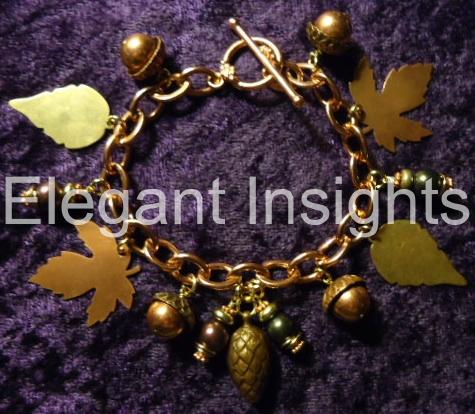
Scattered Leaves Charm Bracelet


A few Fun Facts

– Laura likes beautiful things that sparkle; one of her favorite things to work with is copper because of its shine. She remembers the sight and the “warm glow” of it.
– Not only does Elegant Insights create necklaces and bracelets, but purse charms and cane charms that provide some audible as well as visual style to standard white canes and purses and backpacks.
– One of Laura’s favorite things to do is find new sources for her stones, findings, and components.
– If she had to pick a favorite stone to work with, Laura admits that she’s partial to rose quartz and “anything purple.”


How she Does It

Laura has an eye condition called Retinitis Pigmentosa. Right now she does not have any vision, but she does have visual memory, and from a young age she has had a strong sense of fashion which hasn’t changed with the loss of her vision. She sources beads, findings and gemstones from a variety of sources; it’s one of her favorite parts of the creative process. Along with a small staff, she makes all necklaces, bracelets, and charms by hand, using standard jewelry-making tools. Everything is made in-house, including the braille components, and all staff have workshops or workbenches in their homes. Much of Elegant Insights’ business is done online, but a few times a year they are featured at trade shows and conventions.


What’s Next?

An opportunity has been presented to be featured through Amazon’s Handmade platform. This will greatly increase the exposure of Elegant Insights Braille Creations. In order to expand to meet the expected new demand for product, a crowdfunding page has been created. The funds raised will go to purchasing extra tools, supplies and findings, and hiring and training new staff. Laura would appreciate any donation or further exposure to help her novel business expand.


Even though I have had a hard time with the “inspiration” angle of things, I have a hard time denying that I am inspired by Laura’s creativity, novel products, and willingness to take risks. I appreciate Laura’s willingness to answer all of my nosy questions. Visit her website, support her work, share her insight… and look at all the pretty things!

A purse charm with a sun, moon, and stars motif. The word "Shine" is written in braille

Book Review: All the Light we Cannot See

31 Thursday Mar 2016

Posted by blindbeader in Book reviews, Fiction

≈ Leave a comment

Tags

blindness, Book reviews, perceptions

Life has a funny way of being coincidental. I was about halfway through reading this book – written by Anthony Doerr – when this review came out. I contemplated putting the book down and letting that review stand on its own, but I decided to finish the book and publish my own review, if for no other reason than to form my own opinion. I’m glad I did!


Publisher’s Summary

Marie-Laure lives with her father in Paris near the Museum of Natural History, where he works as the master of its thousands of locks. When she is six,
Marie-Laure goes blind and her father builds a perfect miniature of their neighborhood so she can memorize it by touch and navigate her way home. When
she is 12, the Nazis occupy Paris and father and daughter flee to the walled citadel of Saint-Malo, where Marie-Laure’s reclusive great-uncle lives in
a tall house by the sea. With them they carry what might be the museum’s most valuable and dangerous jewel.

In a mining town in Germany, the orphan Werner grows up with his younger sister, enchanted by a crude radio they find. Werner becomes an expert at building
and fixing these crucial new instruments, a talent that wins him a place at a brutal academy for Hitler Youth, then a special assignment to track the resistance.
More and more aware of the human cost of his intelligence, Werner travels through the heart of the war and, finally, into Saint-Malo, where his story and
Marie-Laure’s converge.


A Note about Audio

If you know French – and even if you don’t – skip the commercial audio narrated by Zach Appleman. The narrator’s French is butchered so badly that I had given up on two previous attempts to finish this book in audio. I got through about a third of the audiobook this time before I gave up and switched to a text copy.


Poetic Language

I’ve always been fascinated and interested in books taking place in Europe leading up to and during World War II. I felt the despair in the children’s home where Werner grew up, the changing landscape of Paris before the Germans occupied it, and the town of Saint-Malo (and other cities and towns) as the war raged on. Some might find the shifting in time confusing, as the stories of Werner and Marie-Laure diverge and converge, but the book is so poetic that I found myself glued to the pages. Using darkness as a plot device both physical and figurative was beautiful and heartbreaking and brutal, sometimes in the same breath. The importance of radios was also integral to the story, as – even without the ability to see due to blindness or ambient darkness – the radio allowed the characters to not feel so alone and to communicate, often under the radar.


Marie-Laure: A Perpetual Child

At first I had high hopes for Doerr’s character of Marie-Laure. Her father, after the shock of her blindness sets in, builds a tactile map of their neighborhood in Paris (and later Saint-Malo), forcing her to memorize it and use it to help her navigate her way around. His intentions are laudable, even though a piece of me cringes at the painstaking lengths he went to to make it happen. The ideas about blindness in the 1930s and 1940s are unknown to me. Other reviewers have been frustrated by her counting of storm drains to navigate, but who am I to judge this? Perhaps my way of navigating the world would seem odd and juvenile to those who will come along in seventy years. But in some important and damaging ways, Doerr does not allow Marie-Laure to grow up normal. She has no friends to speak of, she appears incapable of dressing herself even as a teenager, and the adults in her life tell her what she can and can’t do and where she can travel alone. before her father leaves, he washes his 12-year-old daughter’s hair, something that can be seen as tender, inappropriate and/or patronizing, depending on your viewpoint. When Marie-Laure asks questions, they are asked in the way an impish, precocious child would ask them. Maybe the war made those around Marie-Laure more protective than they otherwise would have been, maybe not. But I do think that Doerr could have made Marie-Laure a more complex character during that war than a young girl in a teenager’s body, maybe one who still loved the sea but also helped to care for herself and those around her.

I must also interject here that the image of Marie-Laure as a capable, independent thinker is much more pronounced toward the end of the book. Even so, it was largely because she had to be, making life choices when bombs were falling around her home, not because she chose that path for herself. Her post-War life is only referenced at the very end of the book. But by the time the reader gets to that point the image of a charming, docile girl is foremost in their mind.


Werner: A Man Too Young

From the first time Werner and his sister listened to a radio they found, deep into the night, at the children’s home, I was glued to their story. Werner is a young man who grows up with nothing, living with his sister in (effectively) an orphanage in a mining town in Germany. He is book-smart, good with numbers and formulas and mechanical things, thus earning himself a place at a school for Hitler Youth. His sister is back at the children’s home, young and naive in some ways, wise beyond her years in others. Werner is not a brutal man and seems powerless to stop what goes on at the school and later on the battlefield, where it’s his job to locate clandestine radio transmissions throughout Europe. The Hitler Youth school tries to break the goodness out of him, and somehow it succeeds in making him unwilling to speak up, and yet at his core he is a decent man-child. He cannot understand the brutality, in small ways tries to avoid it, but a deadly mistake truly costs him his innocence. Such passages are hard to read, and yet necessary to his development as a complex character. When he meets Marie-Laure, it’s his chance at redemption…


In Conclusion

I don’t regret reading this book. Maybe I read it in spite or of because of the overwhelmingly positive or negative reviews. Mr. Doerr is certainly an author to watch. His depictions of Werner’s life – both before and during World War II) were engrossing and believable. While I wish he would’ve portrayed Marie-Laure (and the actions of those around her) differently, it only slightly took away from my enjoyment of the book. If Marie-Laure’s post-War life had been more well-represented than the last handful of pages – an independent woman with a career, a sexuality, a family – it would’ve made her father’s and uncle’s protection of her (war-time or not) easier to swallow.


4/5 stars (3 if it were audio).

Do you See me with Vision?

26 Saturday Mar 2016

Posted by blindbeader in blindness

≈ 1 Comment

Tags

ambassadorship, blindness, comments, disability, perception, videos

Last week, the below video was shared in honor of World Down Syndrome Day. it is narrated by a young woman named AnnaRose, who has Down Syndrome, and the activities depicted are portrayed by an actress named Olivia Wilde, who does not. Only at the end of the video does one see AnnaRose herself, when she says |This is How I see myself. How do you see me?”


There seems to be two minds regarding this video, and in my opinion both are right. One is that it is important to look beyond the disability of Down Syndrome and embrace AnnaRose as a sister, daughter, or friend. On the Youtube video page, we learn that AnnaRose is a student, an employee, and an athlete. Her life is ordinary in many ways, so the hope is that you look beyond her disability and view her through the lens of humanity. She sees herself following her dreams, especially if they are impossible. She sees herself living an “important, meaningful, beautiful life”, and after all, isn’t that what we all want for ourselves?


The other train of thought is more about the visual depiction of AnnaRose’s life, her dreams and her goals. She says she wants to meet someone to share her life with, to be a sister, daughter, friend, to laugh until she can’t breathe, and to cry sometimes. But the video is acted by an actress who doesn’t live with Down Syndrome. This has left many disability activists with the sinking feeling that AnnaRose’s disability, and therefore a part of her identity, is being erased. In a world where disability is either fodder for inspirational feel-good stories or a means of discriminatory treatment, many people with disabilities want the public to see them openly living lives with Down Syndrome, or using a wheelchair, or accompanied by a service dog. Erasing disability is like erasing a part of one’s identity.


I first saw this video a week ago when it was first published, and honestly, it’s left me so conflicted. In my opinion, both schools of thought are absolutely right, and yet…


I am a woman with a disability. As such, I face many reactions from the general public. I’ve heard the sickly sweet tones of service staff talking to me like I’m a child. I’ve been told that it’s amazing and courageous that I’ve held over ten years of nearly continuous employment, heard the gasps of concerned protectiveness when I mention I enjoy running with my guide dog, or felt the need to fill the stunned silence when I mention that I have started up my own jewelry design business. Conversely, I’ve been told how sorry people are that I can’t see, that my husband is a good man for “taking care of me“, or that there’s no possible way that I can fit in in an office setting despite my work history proving otherwise. It would be a lie if I said these comments and impressions don’t affect me, because they do, no matter how I try and fight it. Not only do they affect how I see myself, they ultimately affect my livelihood and ability to be autonomous and self-sufficient. So, in a way, I want people to look past my disability, to allow me to make mistakes or succeed on my own merits as a woman, not just settle for “good enough” because of the perception that I can’t do any better because I have a proverbial scarlet D for Disabled tattooed on my forehead.


And yet, I have no desire to hide my disability. This is partly because it’s not possible for me, but it’s also because I feel like I need to live the best life I can – a vibrant, complex, nuanced, full life with blindness – in order to be happy and to embrace all of who I am. The comments and questions and seemingly constant advocacy aren’t ever going to go away, so as I see it, I have two choices: I can run and hide and let everyone else fight battles for me, or I can prove again and again that there is nothing shameful about being blind, and in fact it has its own advantages. To ignore my blindness completely is to ignore the one thing in my life that has made me as strong as I am while simultaneously bringing me to my knees. You wouldn’t expect a parent or spouse to hide the existance of their child or partner, and yet parenthood and committed relationships often change the lens in which we view the world. So why should anyone hide their disability just to make you more comfortable?


I want you to see more than just my blindness, to view me as a friend, an employee, an athlete, an entrepreneur, a customer… a human being. Talk to me, and anyone with a disability, as though your comments were directed back at yourself; realize that we are more than just people whose eyes don’t work or who don’t hear well or are unable to walk at all or without significant pain. We share your humanity, enjoy some of your hobbies, have opinions about religion or politics, have hopes and dreams and desires for our lives. But you don’t need to tiptoe around us, either. Don’t ignore our disability; it is still a part of who we are. In ignoring it, you are in effect not acknowledging the discrimination that we face and the pain and anger that engenders, and can’t truly get to know the completeness of our lives by truly celebrating our successes or picking us up when we’re feeling down.


Do you see me as a woman, with dreams for the future and hopes for tomorrow? A woman who likes watching hockey, loves running, and makes pretty beaded things? A woman who drinks too much coffee, loves the sound of a recent snowfall, and sings at the top of her lungs when no one’s around to hear her? That’s great! You see a big part of who I am. Do you see a woman whose eyes don’t work right, who puts labels on her canned goods in her pantry, who navigates the world with a guide dog by her side? A woman who is happy and content with her life, blindness and all, who wants to kick down doors and break down barriers? That’s another part of who I am. You can’t separate one from the other, and yet in a way I need you to. If all you can see is what doesn’t work (my eyes), then you’re missing out on a wicked Scrabble game, a loyal employee, or someone who will cause you to rethink your view of the world. And if you act like my blindness isn’t there, or is scary and uncomfortable, you’re ignoring a true reality of my existence. Put the pieces together, take them apart. See me completely, because I can’t envision myself as one person without the other keeping me company.

An Open Letter to Service Dog Fakers

18 Friday Mar 2016

Posted by blindbeader in Uncategorized

≈ 19 Comments

Tags

access, autonomy, disability, dishonesty, fakers, guide dogs, open letters, service dogs

Listen to a reading of this postDownload

You and I haven’t had the displeasure of meeting, but you’ve met almost all of my friends at one point or another. You may think you’ve pulled one over on everyone, but you’ve actually made governments – state or provincial – stand up and take notice of what you’ve been doing. I wish I could say that it’s nice to meet you, but then I would be lying… something you do every day by passing off your pet (even a well-behaved one) as a service dog. Maybe you know in the back of your head that your actions may affect those of us with illnesses or disabilities who use service dogs to increase our independence or alert to oncoming life-threatening situations; maybe you just want what you want. You love your dog, I get it; I love mine, too. But just in case you weren’t aware, there are some broader implications of buying a $75 vest online and getting some doctor you’ve never met to sign a piece of paper indicating you need a “service” dog. You’ve heard the general arguments, and you keep doing this, so maybe it’s time someone asked some tough questions.


Is it Even RIGHT for your Dog?

If your dog doesn’t scrounge, bark, growl, lunge, wander around unnecessarily, or display other inappropriate behavior in public, move on to the next section; I have different questions for you.

Service dogs are well-trained and welcomed into public establishments for good reasons. They go through hundreds if not thousands of hours of public access training by owners, puppy raisers, and/or professionals, who work their way up to being able to take the dogs into malls, restaurants and stores. Not all dogs that are bred, raised, and go through service dog training complete it for a variety of reasons (much of it stress or health related). Even trained service dogs have “off” days but overall are well-behaved and continuously trained to be that way even after being issued to a handler with a disability or life-threatening illness. If a service dog is uncontrollable or aggressive or ill, and no amount of retraining can fix this, handlers go through the heartbreaking process of retiring the dog. In contrast, you just want what you want – your dog in a store with you – and don’t care about the sudden stress you’re putting on your dog. Your Fluffy, nine times out of ten, is incredibly stressed by your taking him into Walmart to buy your quart of milk, dozen eggs, and a replacement toothbrush, and can act fearful or aggressive due to that stress. And don’t get me started on your allowing your dog to get out of control, display aggressive behavior, to wander away from you, or to do other things for which a child would be asked to leave had they done them. In a terrific facebook post, a friend put this better than I ever could:

… look at it from that pet dog’s perspective. He has no idea what is happening to him, very likely does not like it, does not know how to behave, and doesn’t have a handler who is listening to any of the dog cues he is sending for: “Please don’t bring me here. I don’t like this. I’m scared or mad.” That dog is clearly saying one thing, but all that human hears is: “Me. I get to do what is convenient for me. Screw my dog. Screw the civil rights of other people. Me.”


Can you Expand your Dog’s Training?

If you’ve socialized your pet appropriately in pet-approved malls, restaurant patios, and stores, you have my gratitude. Dogs are a reality that our service dogs will encounter regularly, and the better trained or behaved your dog is, the easier it is for my service dog and I to go about our business.

But if you have the previously-mentioned “service dog” vest on your pet dog and take well-behaved Brutus or Fluffy into malls and stores where dogs are generally not welcome, not only are you committing a fraud by passing as someone with a disability or illness, you are making your dog unnecessarily dependent on your companionship. You think you can’t function without him, but in reality you are making him uncomfortable with his own company. If your dog can’t be left at home for a few hours without disturbing the neighbors with her barking or destroying your couches out of boredom, this makes my point for me. Why don’t you take some of that wonderful training foundation you’ve put into place and use it to work with him on separation anxiety? You’ve gotten the socialization training down pat, so take a little bit of extra effort and make all of our lives more convenient, not just yours. I have full confidence in you!


Do You Know Your Fraud Is Coming to An End?

Not only are legitimate service dog handlers sick of what you’re doing, businesses and governments are, too. This will affect your ability to pull off this fraud for much longer, particularly as it pertains to your misbehaving Brutus or Fluffy. Many of us service dog handlers are educating businesses on what is appropriate service dog behavior, what is a legitimate service dog being under control but having a rough day, and what is flat-out unacceptable. Businesses and service providers are being advised about the questions they can ask, what behavior is acceptable, and when they can deny service. Did you know that in most jurisdictions, businesses have the right to ask that any misbehaving dog – service dog or not – leave the premises? You’ve gotten by with your mass-produced “service dog” vests and registry cards (which, by the way, currently aren’t worth the plastic they’re printed on), counting on the fear of getting sued for asking you to leave your disruptive “service dog” outside or at home. But many of us handlers have your number and are contacting businesses and advising them of their rights (because, after all, they have rights, too).

What is also looking much more likely in a lot of states and provinces is a government-issued ID, which will make it much much harder, and the penalties much more expensive, to pass Brutus or Fluffy off as a service dog. And you know who’s going to have the burden of providing this legitimate piece of plastic for the asking? Someone like me, who thank you very much, is noticeable enough because of my service dog – you know, one that mitigates a disability? I hope that financial penalties for your fraud will be high, even as I don’t think it’s fair that I will likely one day have to show identifiable information to anyone who asks because you’ve chosen convenience and selfishness over my right to an autonomous and independent life.


Do you Actually want to Live My Life?

Speaking of living an autonomous and independent life, do you realize what these real service dogs actually do? They guide blind and visually impaired people safely through streets and malls and airports. They alert a deaf or hard-of-hearing handler of sounds in their environment. They pull wheelchairs and open doors and retrieve dropped objects. If their handler is going through a panic attack, it is the dog’s job to indicate that one is coming or remove the handler from the situation. If a diabetic’s blood sugar is low or an epileptic is going to have a seizure, these dogs alert them to get to a safe place or to take their medication. And I haven’t even scratched the surface. These dogs do a million and one little things that assist the independence of people with disabilities and/or with illnesses that could threaten their lives.

Have you lived a day where you hear a child ask what’s wrong with you, or how sorry someone is that you are blind or deaf or use a wheelchair? Have you been told that severe anxiety or post-traumatic stress disorder is all in your head while you’ve struggled to leave your house and feel safe in a crowd? Do you worry about packing enough food in case your blood sugar gets too low, or have this niggling sense of dread in the back of your mind about when the next seizure could hit? Do you struggle to obtain or maintain a job because people question your ability to perform job tasks, or feel like you have to hide a part of yourself in order to keep the job you do have?

I could go on and on with these questions, but I’ve made my point. Until such point as you’ve lived these lives – whether my own or that of someone I know and care about – then you have no business pretending that you do. Until you’ve had to chew out a parent for allowing their child to make inappropriate overtures to your service dog, until you’ve had strangers abruptly grab your body or mobility aid because they “meant well,” until you’ve been told that your panic attacks or flashbacks are all in your head and to suck it up and get on with it, you do not have the right to use a dog to pretend that this is your reality. If you wouldn’t take your pet dog dressed in “service dog” gear to a job interview because you wouldn’t want the stigma of disability attached to you, then how dare you do so when it’s convenient for you? You want the perks with none of the inconveniences, fears, and complexity that go along with them.


In Conclusion

Many people with disabilities live happy and fulfilled lives, some with service dogs and some without. For many of us, a service dog is the difference between independence and seclusion, confidence and fear, life and death. Are you still going to tell me that this little white lie – pretending you have a disability – doesn’t hurt anyone? Call me the next time someone talks to you like you’re a child, denies you an opportunity for employment, or makes you disclose the fact that you live with PTSD because you “look so normal.” If a store doesn’t want to welcome pets, that is their decision; but they can’t turn away people who use wheelchairs, walkers or canes, so they can’t turn away well-behaved service dogs accompanying people with legitimate disabilities. Unfortunately, actions like yours have caused stores and restaurants to turn us away, usually rudely and publicly. I’m sure your dog is lovely, but you have no business pretending he is what he isn’t, or you live with something you don’t. I don’t care what makes you knock off this self-centered entitled behavior – huge monetary fines, a pricked conscience, or embarrassment from being asked to leave by a well-informed employee of a no-pets-allowed establishment – but it’s time your nose stopped growing.

← Older posts
Newer posts →

Subscribe

  • Entries (RSS)
  • Comments (RSS)

Archives

  • December 2025
  • January 2024
  • December 2023
  • April 2023
  • January 2023
  • December 2022
  • October 2022
  • June 2022
  • April 2022
  • January 2022
  • December 2021
  • October 2021
  • August 2021
  • June 2021
  • April 2021
  • March 2021
  • February 2021
  • January 2021
  • November 2020
  • October 2020
  • August 2020
  • July 2020
  • June 2020
  • April 2020
  • February 2020
  • January 2020
  • December 2019
  • November 2019
  • September 2019
  • March 2019
  • February 2019
  • January 2019
  • December 2018
  • September 2018
  • August 2018
  • July 2018
  • June 2018
  • May 2018
  • April 2018
  • March 2018
  • February 2018
  • January 2018
  • November 2017
  • October 2017
  • September 2017
  • August 2017
  • July 2017
  • June 2017
  • May 2017
  • April 2017
  • March 2017
  • February 2017
  • January 2017
  • December 2016
  • November 2016
  • October 2016
  • September 2016
  • August 2016
  • July 2016
  • June 2016
  • May 2016
  • April 2016
  • March 2016
  • February 2016
  • January 2016
  • December 2015
  • November 2015
  • October 2015
  • September 2015
  • August 2015
  • July 2015
  • June 2015
  • May 2015
  • April 2015
  • March 2015
  • February 2015
  • January 2015
  • December 2014
  • November 2014
  • October 2014
  • September 2014
  • August 2014

Categories

  • Blind Lady Gets Sh*t Done
  • blindness
    • My Sorta Kinda Maybe (In)accessible Life
  • Book reviews
    • Fiction
    • Nonfiction
  • Epic Road Trip of Awesome
  • Exploring Edmonton
  • Finance Friday
  • Guide Dog 2.0
  • New York vacation
  • The Empowered Series
  • The Intrepid Journey 2018
  • Ultimate Blog Challenge
  • Ultimate Blog Challenge, Part 2
  • Ultimate Blog Challenge, Part 3
  • Uncategorized

Meta

  • Create account
  • Log in

Support my blog!

Buy Me a Coffee at ko-fi.com

What’s gotten folks talking?

RoseQuartz's avatarRoseQuartz on If you Had Told Me…
Carol anne's avatarCarol anne on If you Had Told Me…
Annie Chiappetta's avatarAnnie Chiappetta on If you Had Told Me…
Carol anne's avatarCarol anne on Guide Dog 2.0: One Year L…
Carol anne's avatarCarol anne on Guide Dog 2.0, One Year Later:…
Carol anne's avatarCarol anne on Guide dog 2.0, One Year Later:…
Carol anne's avatarCarol anne on Guide Dog 2.0, One Year Later:…

Enter your email address here and receive new posts by email!

Join 210 other subscribers

Blog at WordPress.com.

  • Subscribe Subscribed
    • Life Unscripted
    • Join 210 other subscribers
    • Already have a WordPress.com account? Log in now.
    • Life Unscripted
    • Subscribe Subscribed
    • Sign up
    • Log in
    • Report this content
    • View site in Reader
    • Manage subscriptions
    • Collapse this bar
 

Loading Comments...